Albert Pinkham Ryder
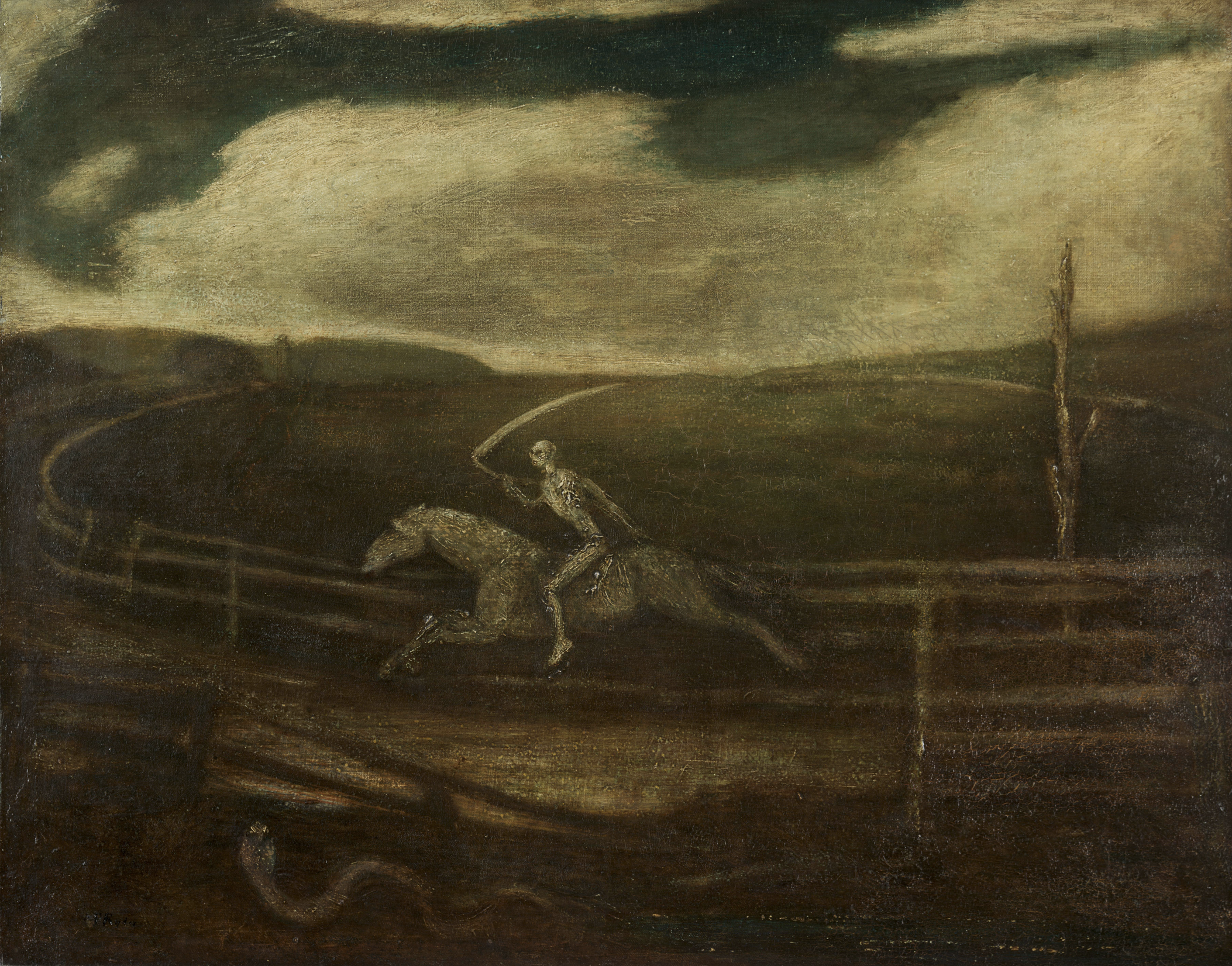
The Race Track (Death on a Pale Horse) (1895–1910)
Albert Pinkham Ryder (1847–1917) was born in the whaling port of New Bedford. He is known for moody, atmospheric paintings that sit somewhere between landscape and vision. His work has had an influence on western figurative painters to this day. Mostly I think Ryder became a symbolic representative of a painter who allowed future generations of artists to more deeply investigate expressive mood, compression, and an almost claustrophobic sense of space.
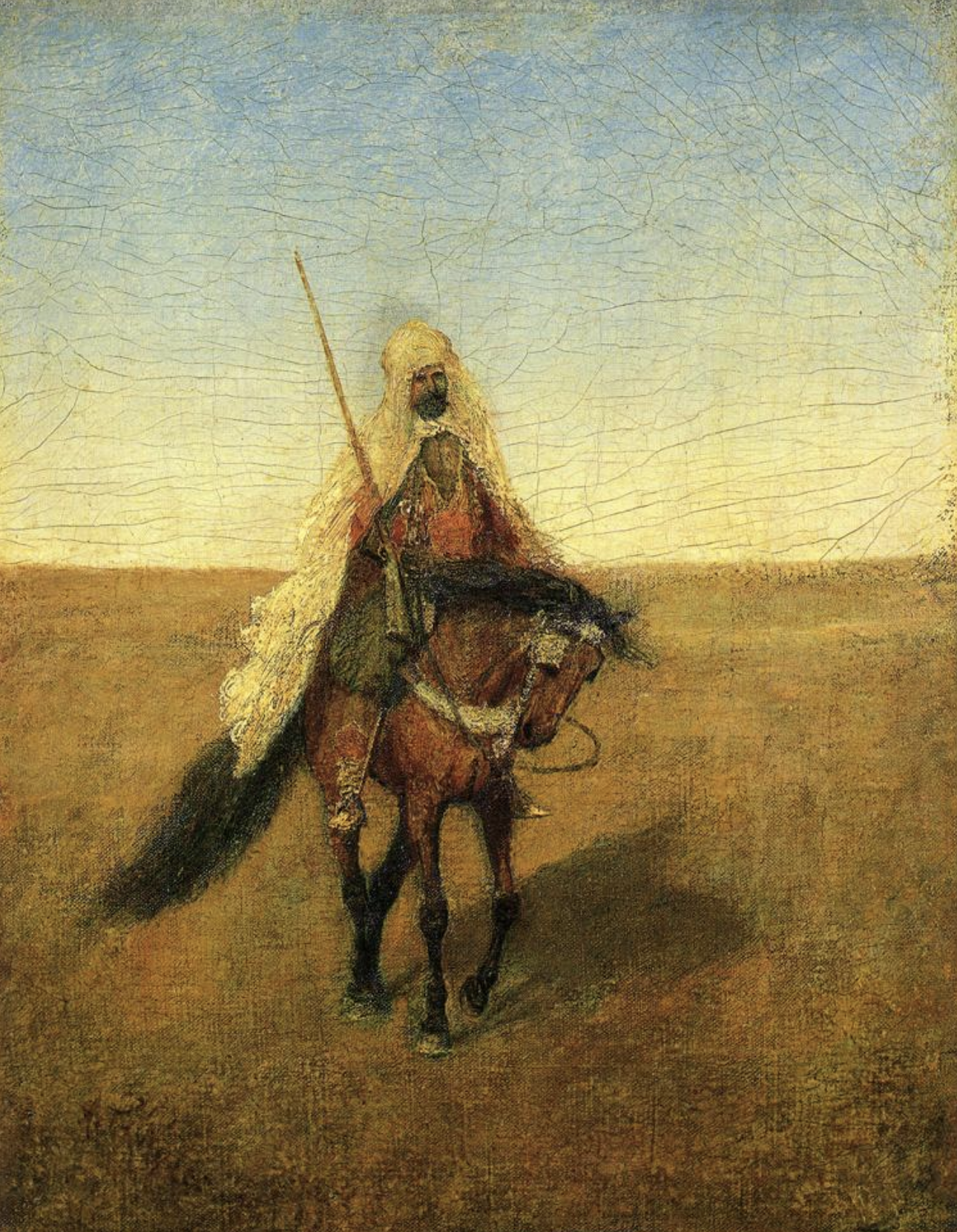
By the 1870s, Ryder was successful enough to support himself, primarily through small, tonal landscapes. Looking at works like The Lone Scout, depicting an isolated figure glowing against a darkened field. I can’t help but think of Odd Nerdrum and his staged, luminous figures set in emptied landscapes. There’s no documented connection.
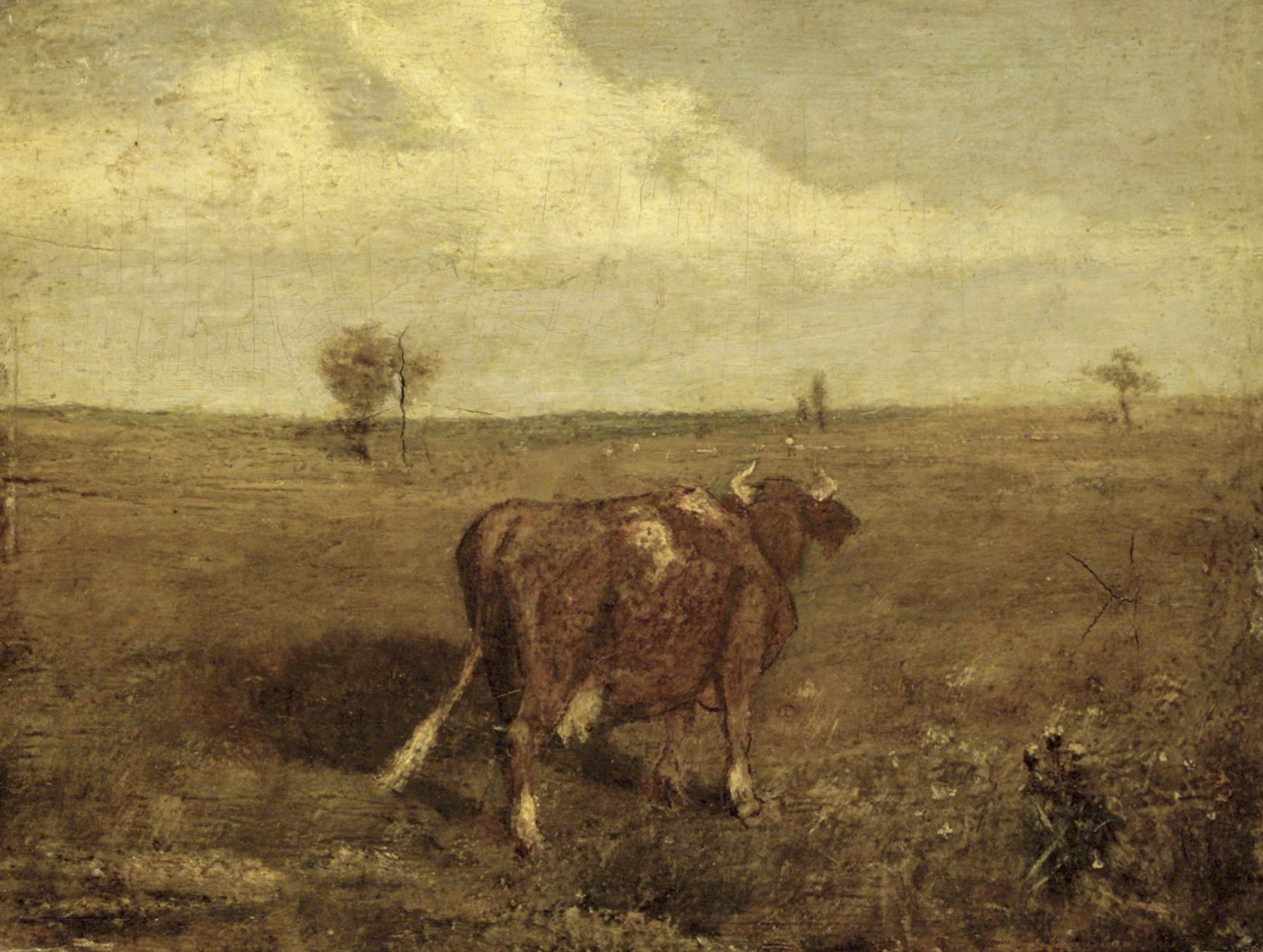
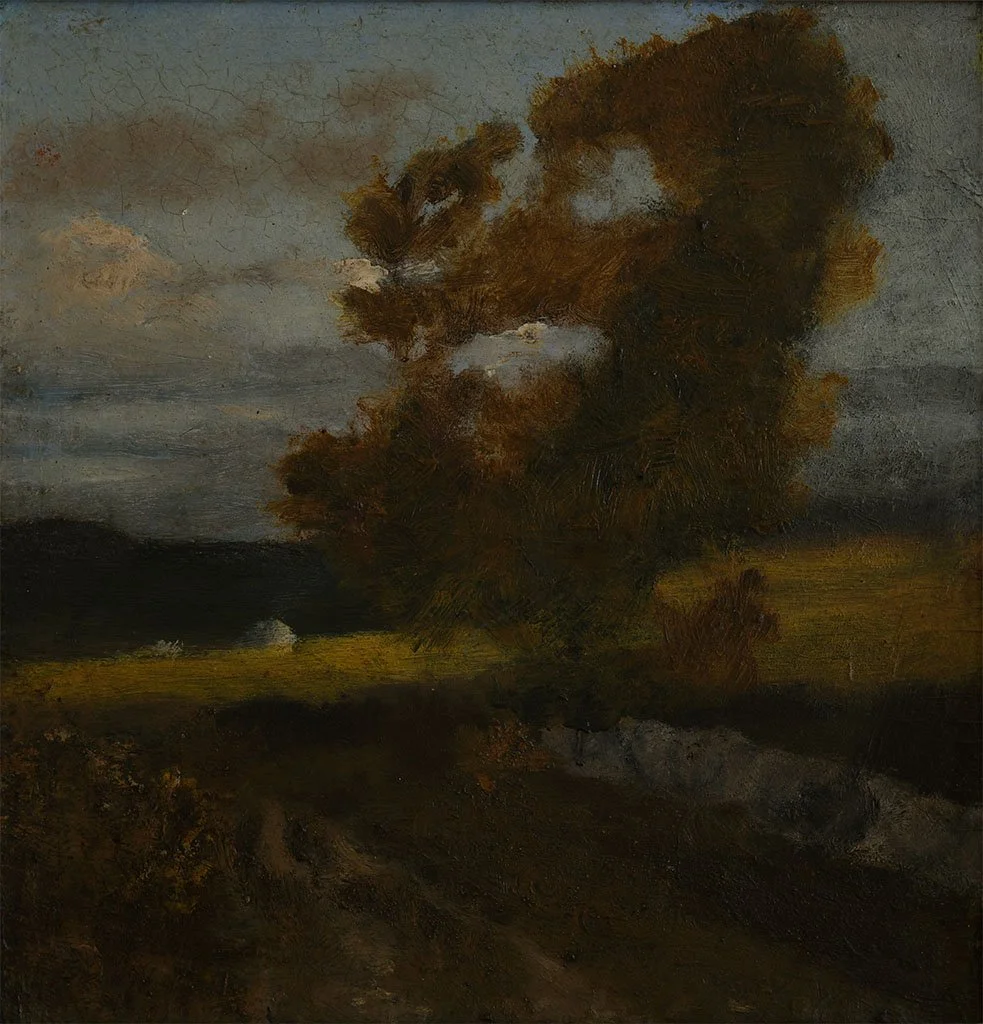
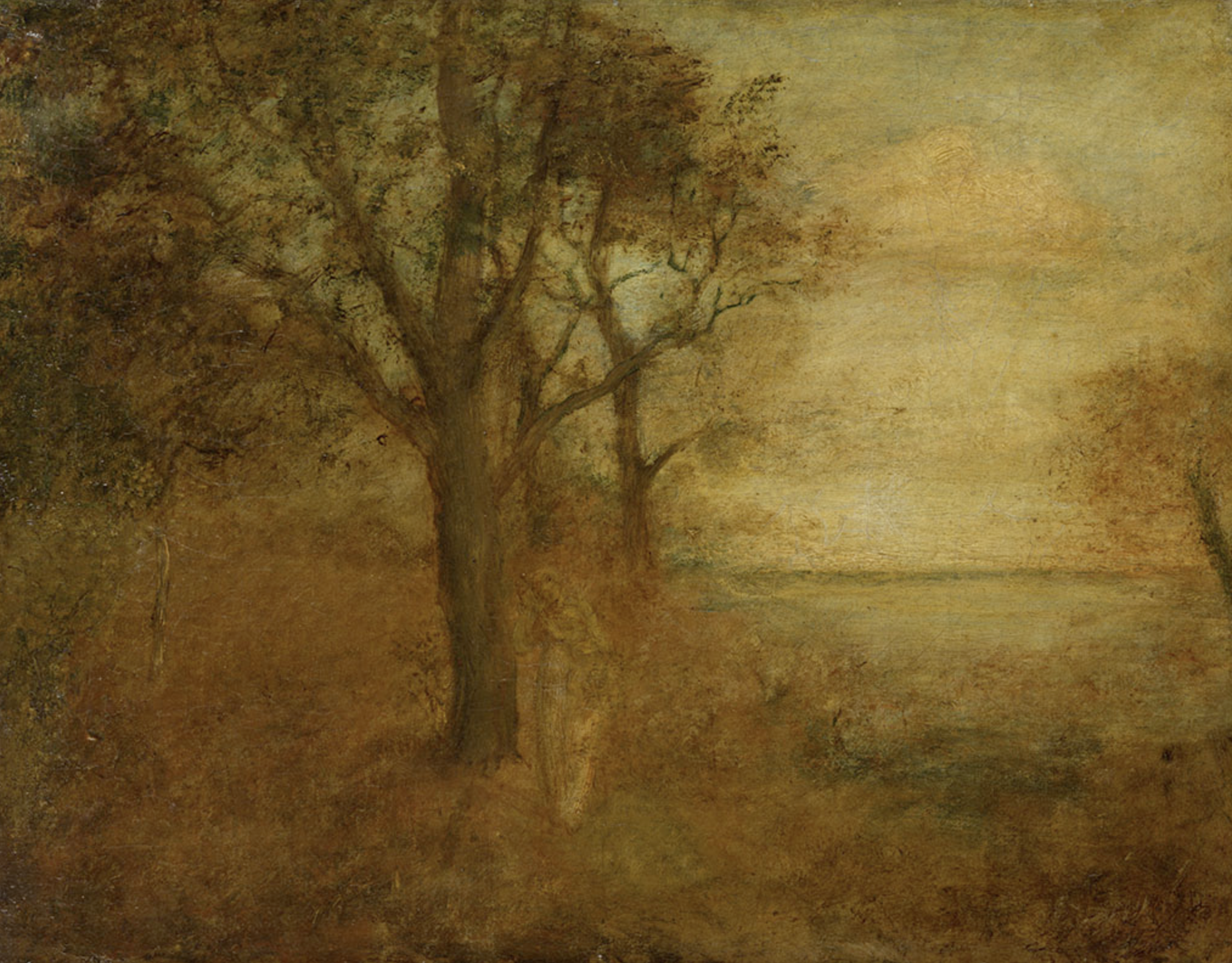
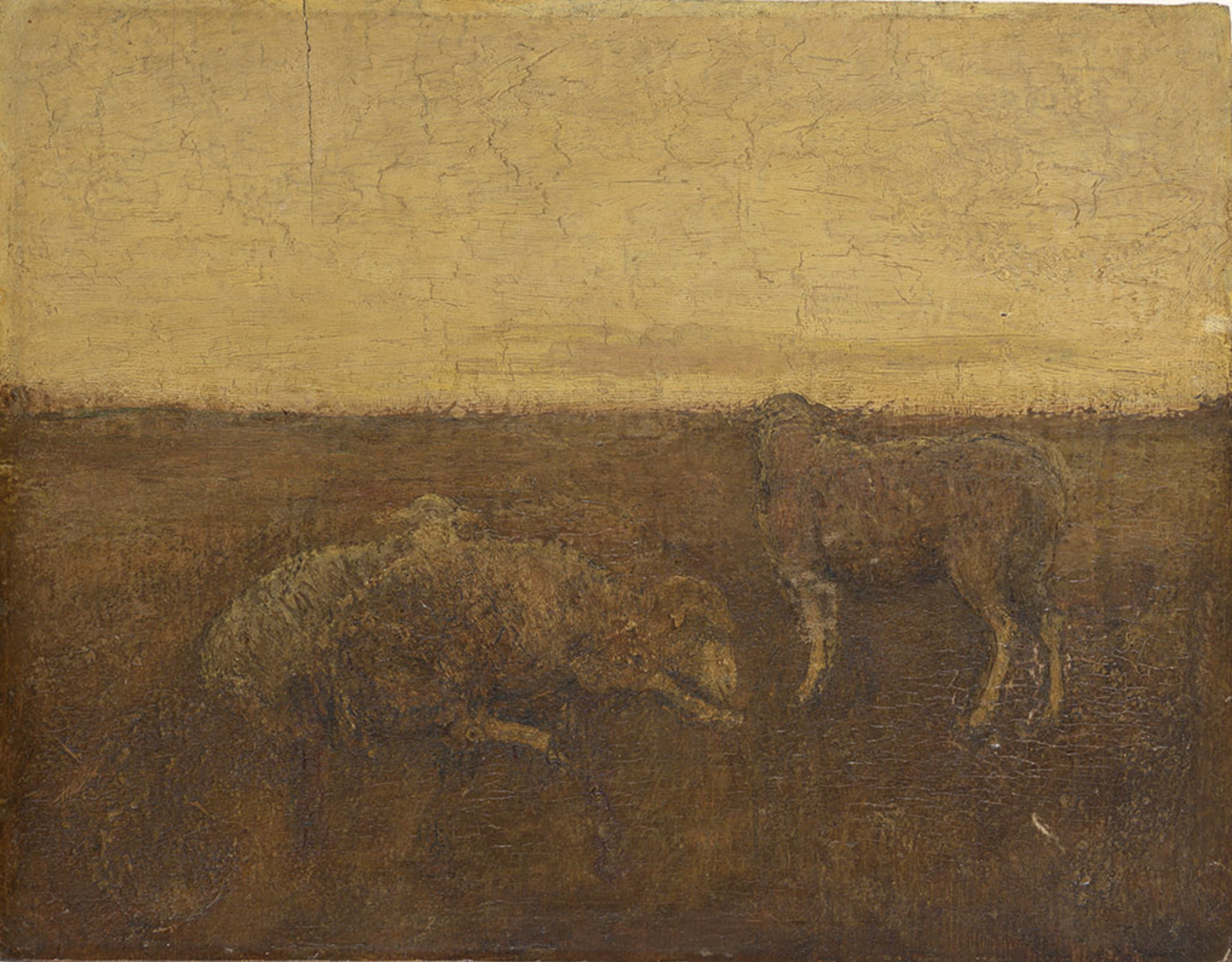
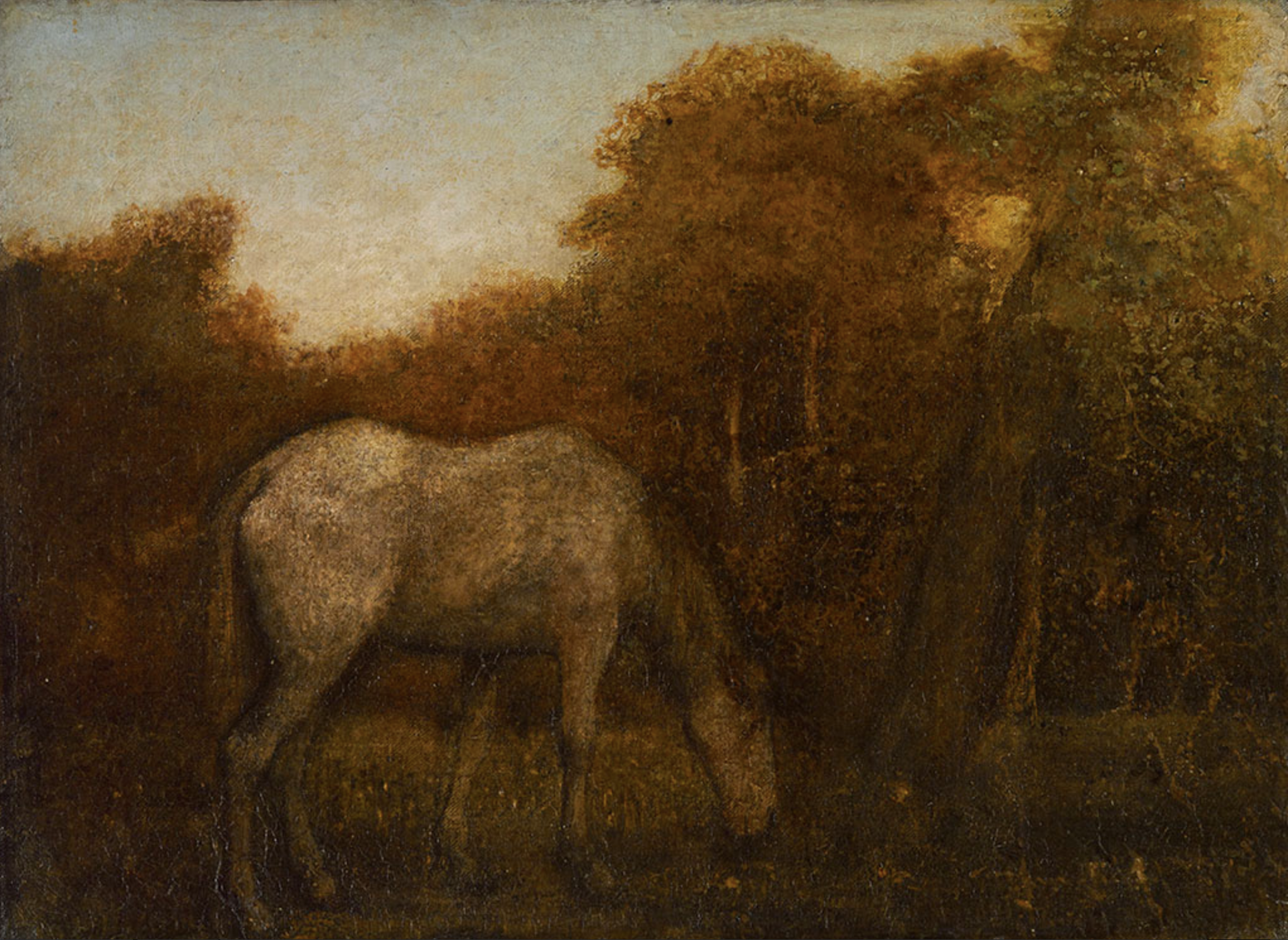
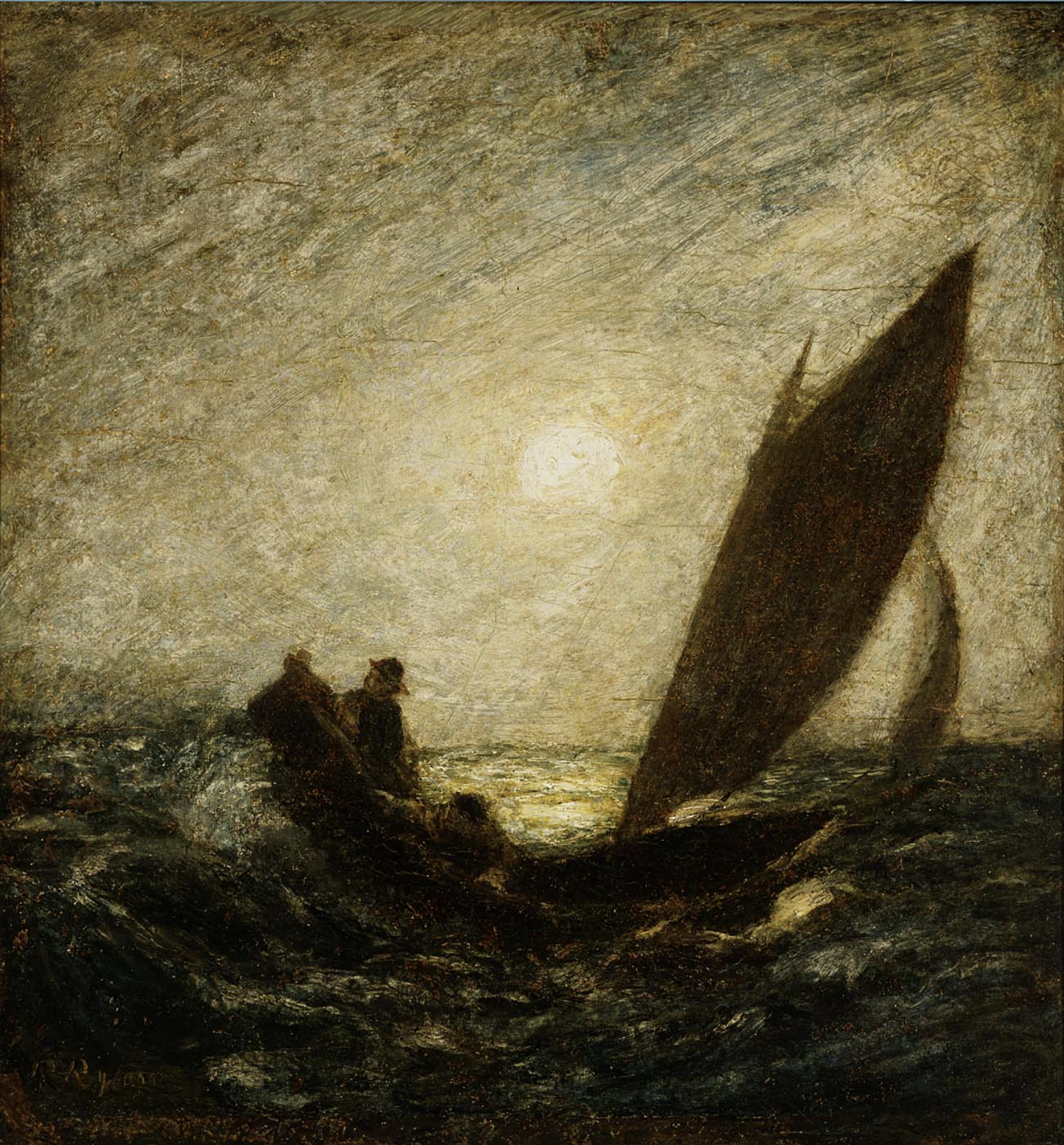
In the mid-1880s, Ryder appears to have shared a studio with Robert Loftin Newman. Documentation is thin, but the timing aligns with a noticeable shift in Ryder’s work.
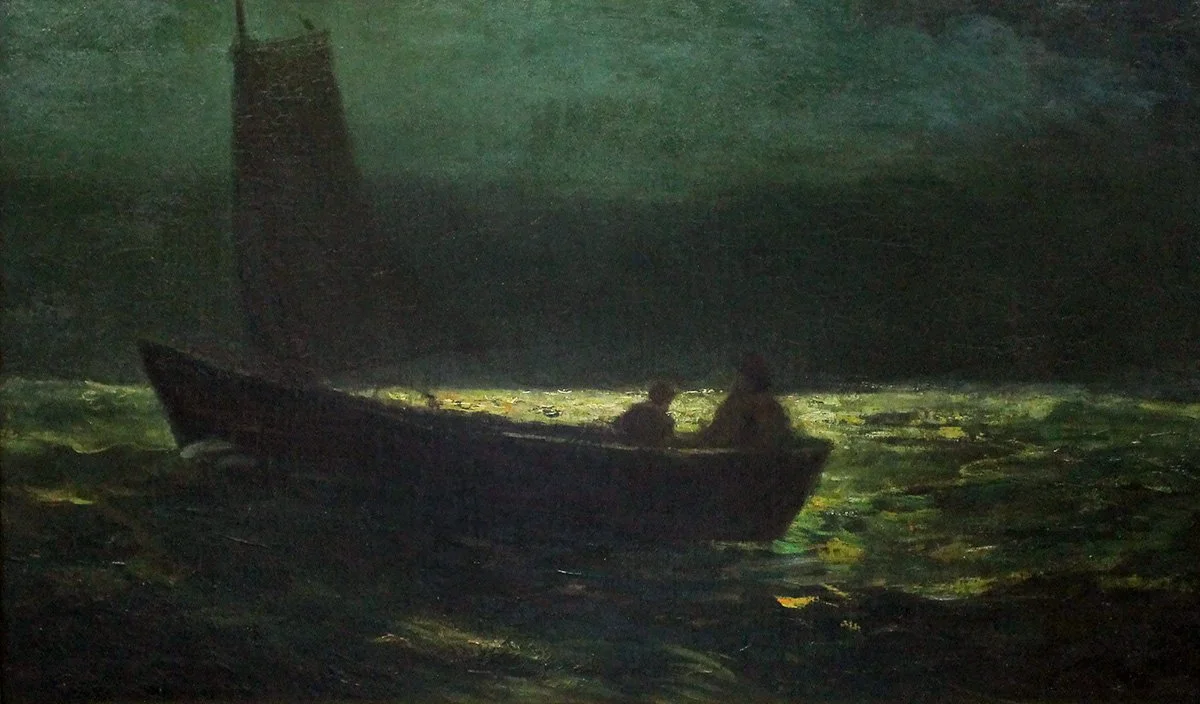
Newman’s surviving work is scarce, but what remains shows a similar interest in nocturnal atmosphere and poetic subject matter in the piece ‘Boating at Night’ below. (There are almost zero Newman paintings left).
I am drawn to Ryders handling of materials. Tubed pre-mixed paint was a new thing in France during the 1880s. For most of Ryders lifetime, rtists still commonly prepared their own pigments and mediums. But Ryder pushed this far beyond convention. He was less concerned with durability than with achieving a particular internal luminosity.
To frame the issue:
Acrylic: pigment suspended in a plastic binder; dries & cures quickly and allows immediate layering.
Egg tempera: pigment mixed with egg yolk; dries to the touch quickly, but fully cures over months; supports stable, layered buildup.
Oil: pigment in drying oil (typically linseed); slow oxidation; layering requires careful control (“fat over lean”) to avoid cracking. It can take a year or more to fully cure.
Ryder largely ignored these constraints. He reportedly mixed pigments with varnishes, resins, and oils in unstable combinations, sometimes reworking surfaces long after they had partially set. The result were paintings that materially achieved a unique depth and glow he was after, but at the cost of structural integrity.
There are accounts of his paintings remaining tacky decades after completion. Today, many have darkened significantly, with surfaces that have cracked, sagged, or even partially disintegrated.
This puts him in a lineage of artists who treated material stability as secondary to effect. Willem de Kooning, Mark Rothko, and Anselm Kiefer all, in different ways, pushed materials beyond archival limits. In Kiefer’s case, deterioration is often embedded in the meaning. With Ryder, it feels more like a byproduct of ignorant experimentation.
The irony is that the very instability of his surfaces contributes to the feeling of the work. The darkness, the sinking tones, the slow collapse, it all reinforces the mood he was chasing in the first place.
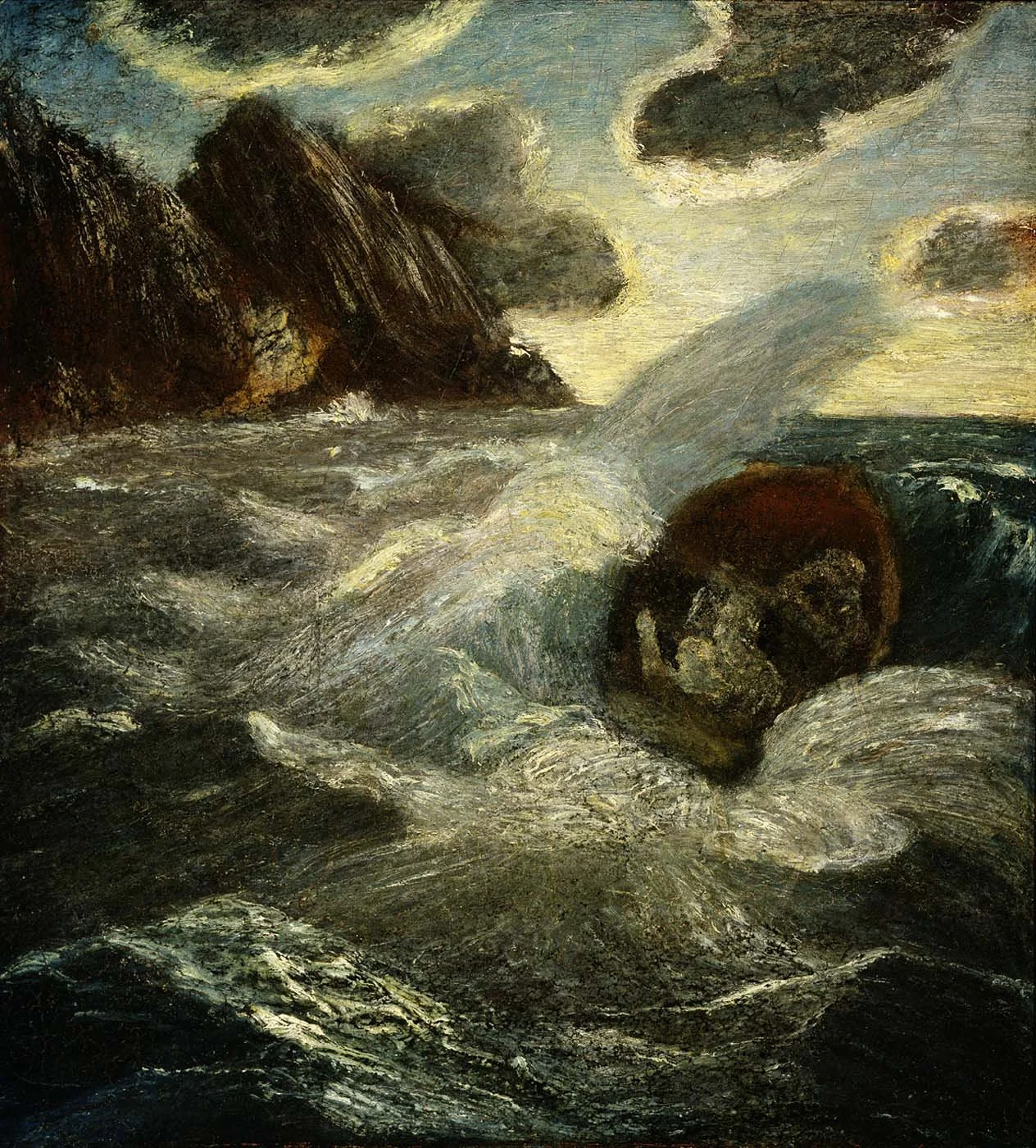
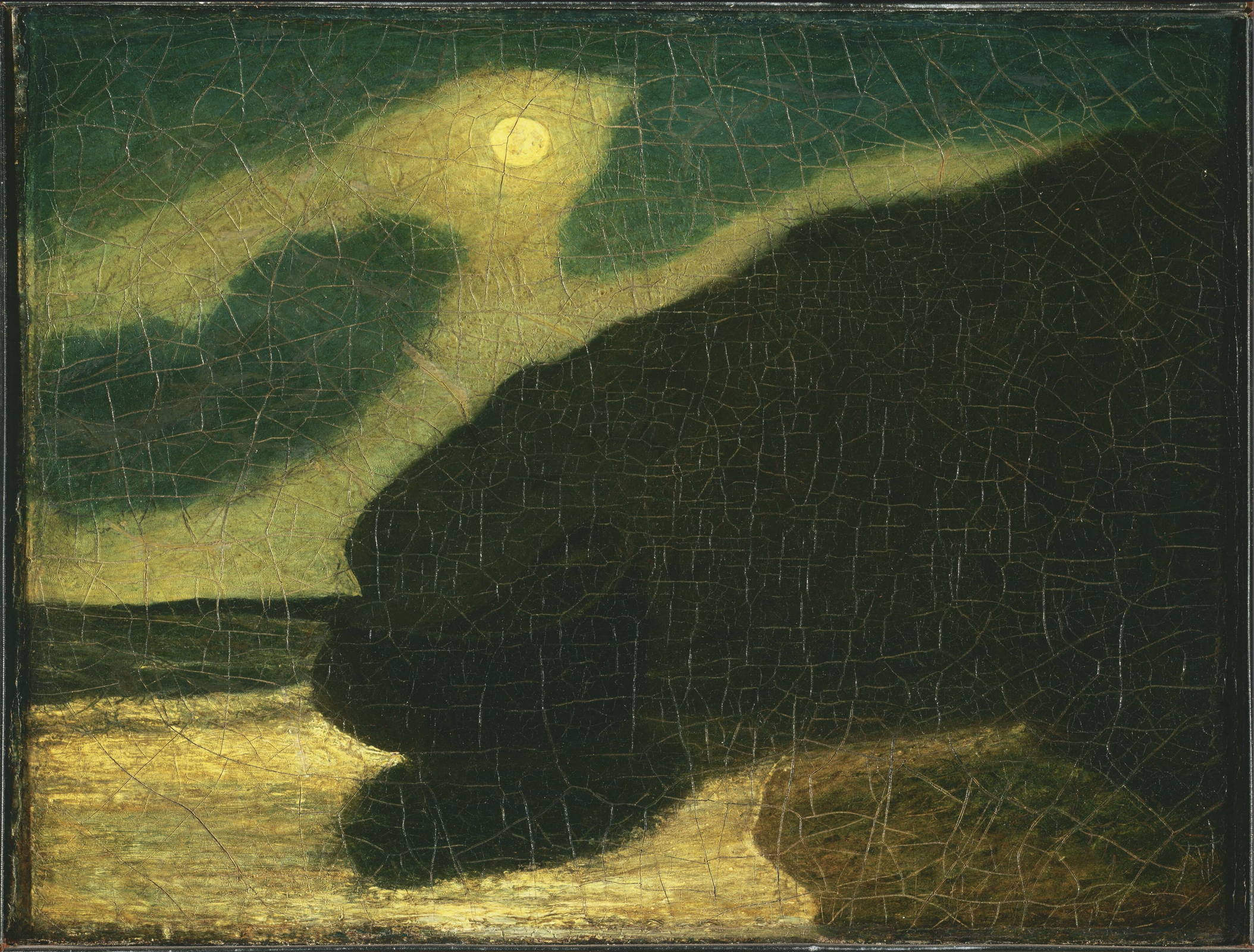
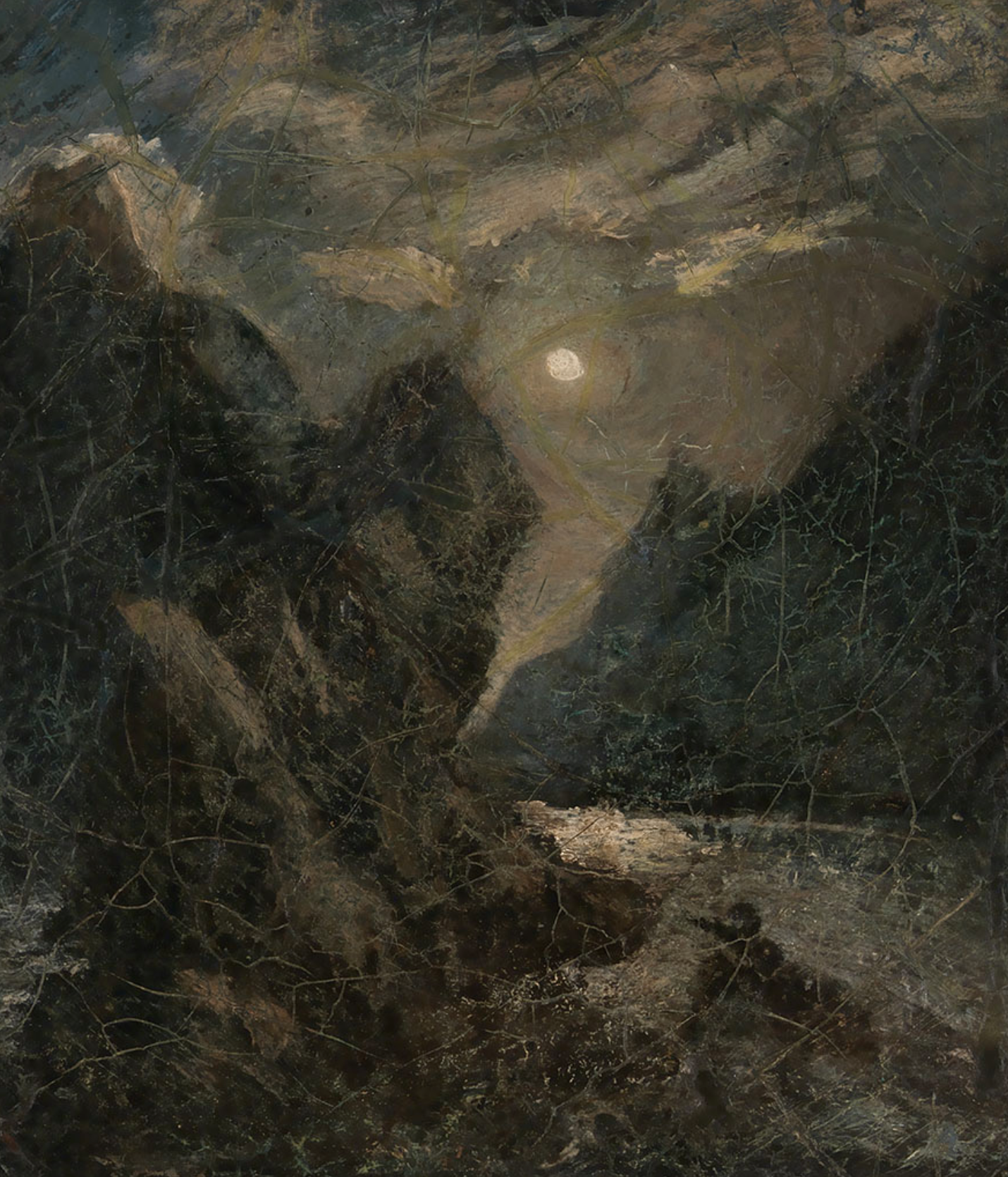
Lorelei 1896-1917
There is speculation that Ryder painted this as a reflection on how he thought of romance. Women as evil seductresses who lured sailors to their deaths. Sounds about right to me. Ryder re-worked this painting over 20 years.
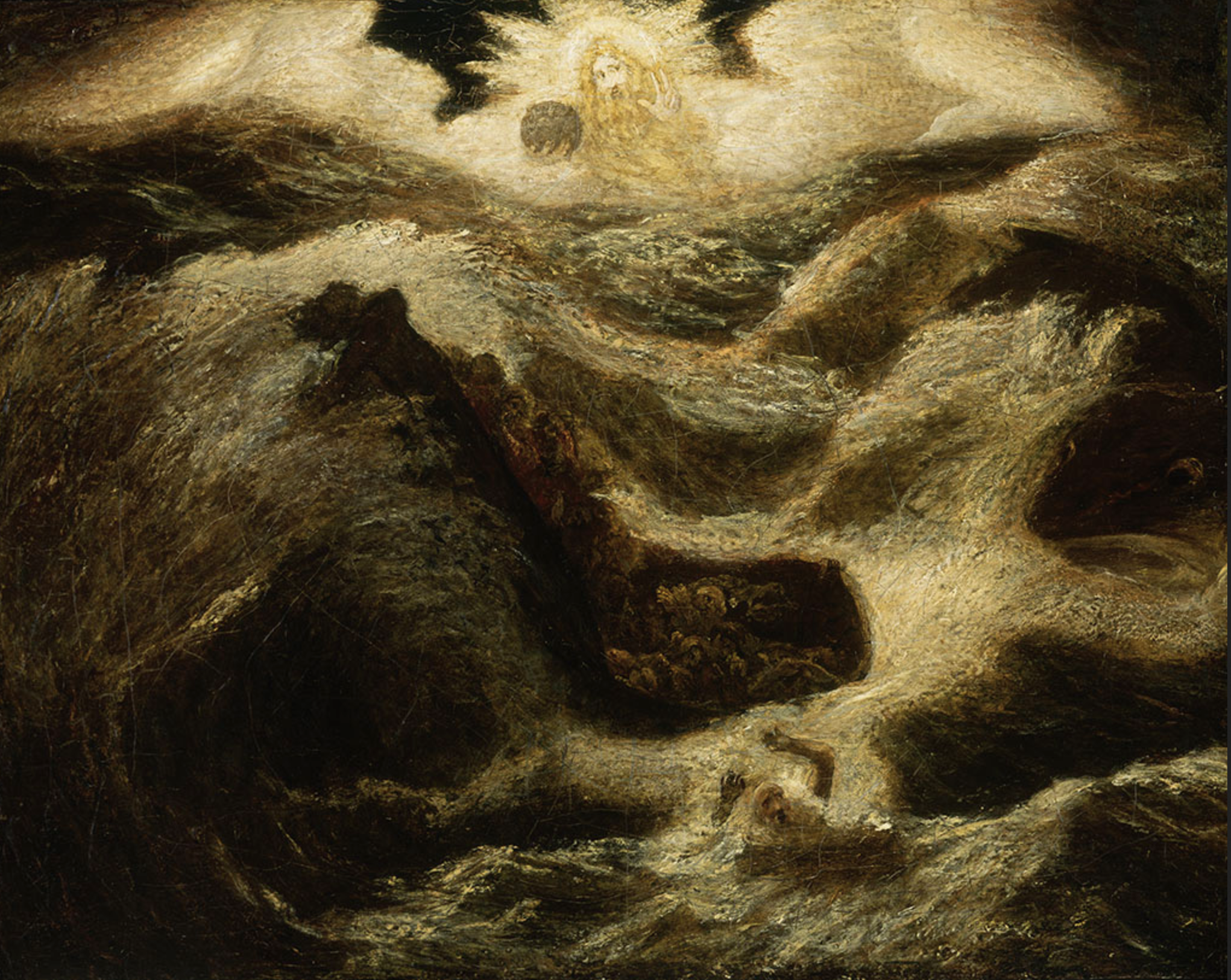
Jonah 1885-1895
Ryder worked on this larger work for a decade. I love this piece. It reminds me of the best of Turner and evokes the chaos of god testing Jonah. (Was Ryder aware of Turner?)
Artists influenced by Ryder: More coming. I want to include a slew of contemporary artists where I really see a lot of Ryders sensibilities.
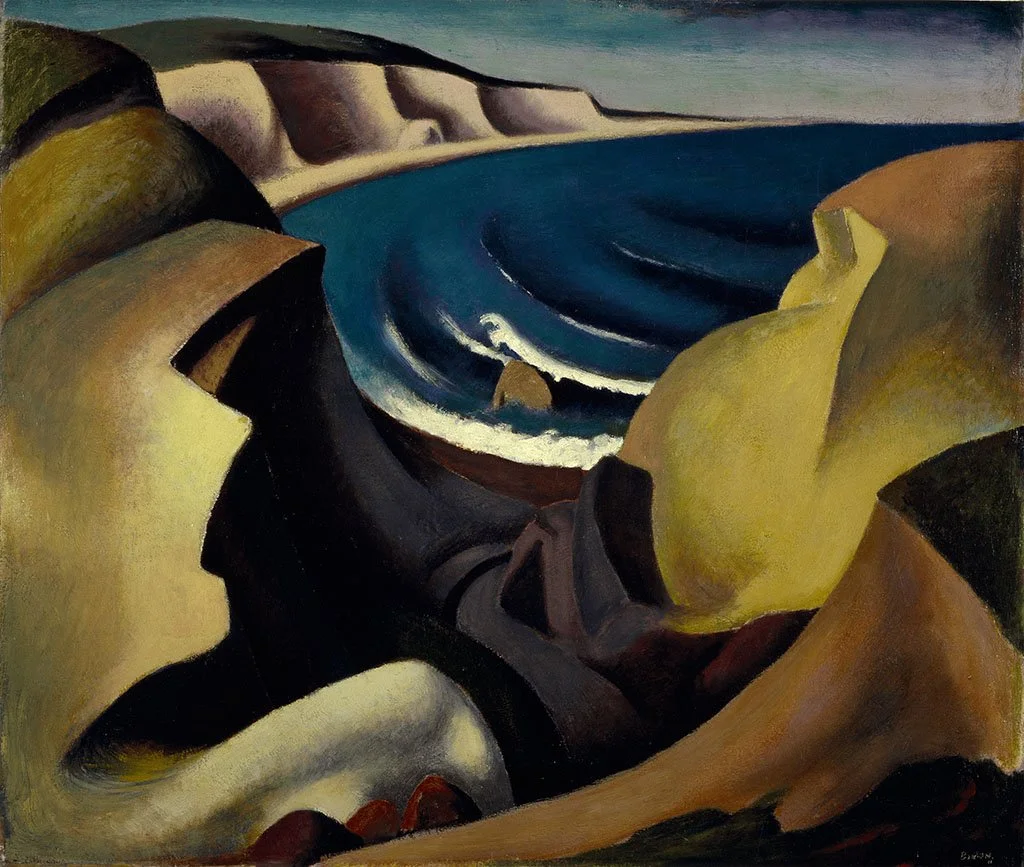
The Cliffs 1921
Thomas Benton