
Brice Marden

I figure I should write out a few thoughts on Brice Marden here since I'm keeping track of artists I've been ruminating on. I'm also working on a series of paintings where as part of the process, I think about Marden and how he approaches his artwork.
Marden is one of those artists who spent his entire career operating within the restraints of the New York art world that emerged from Greenbergian formalism. As an artist, Marden belonged to a generation that inherited many of the concerns of Abstract Expressionism and postwar abstraction. By the time he arrived, many of the major figures had already established careers by staking out highly recognizable visual territories (for example):
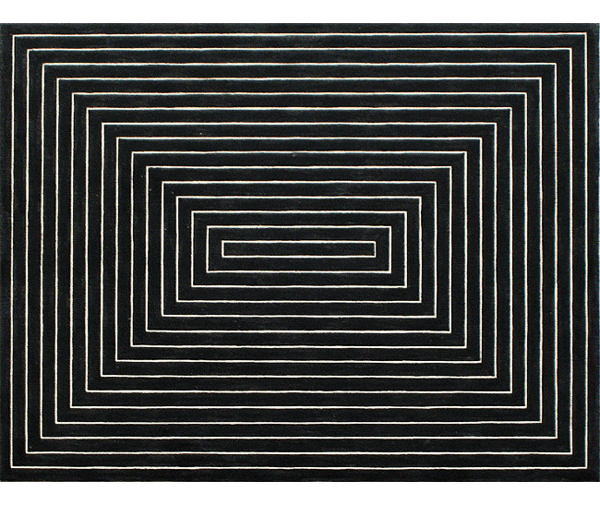
Frank Stella, Black Painting, Mid 1960s
Stella - Geometry Line Paintings
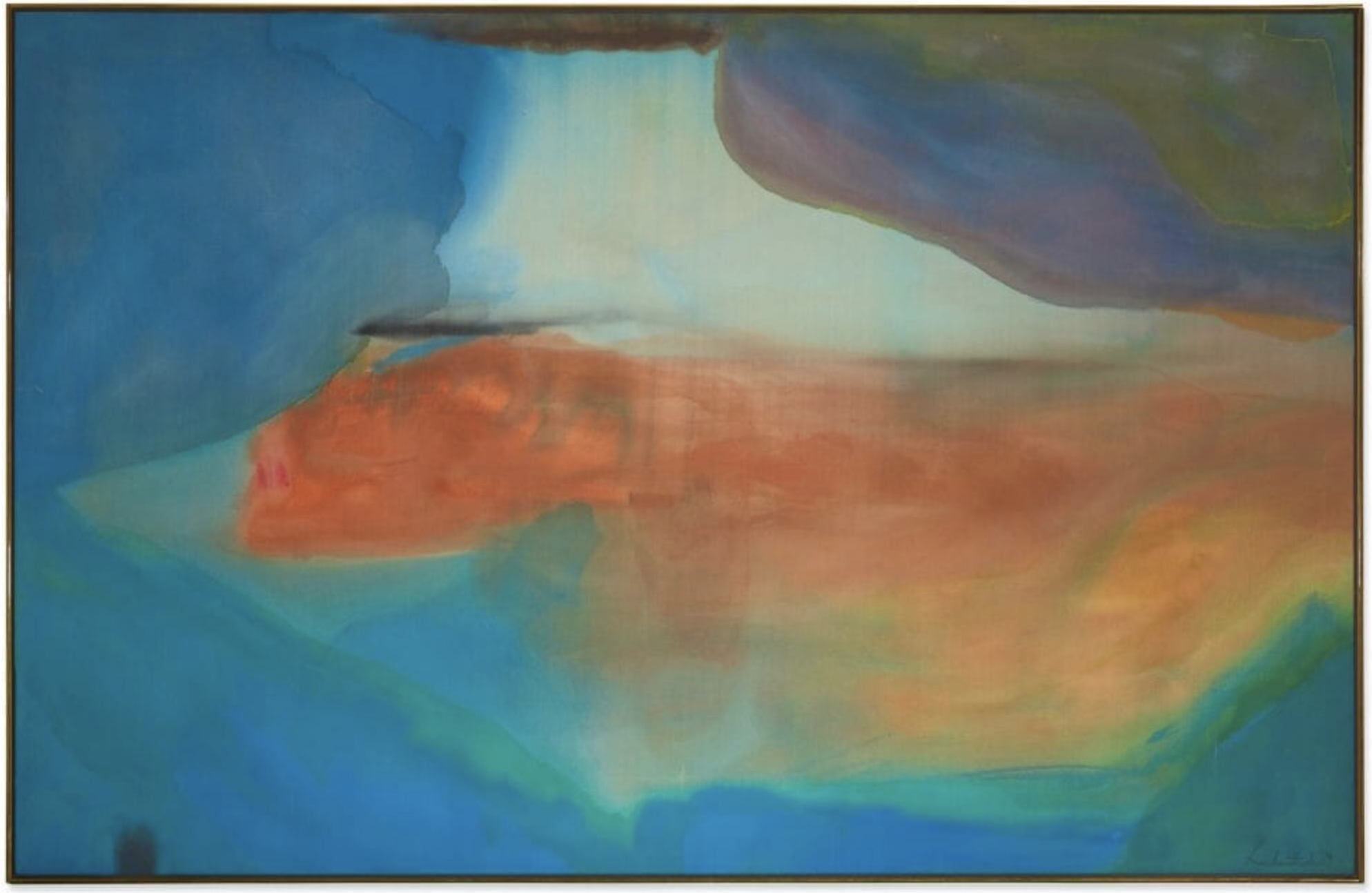
Helen Frankenthaler, Circle 1974
Frankenthaler - Stain Paintings
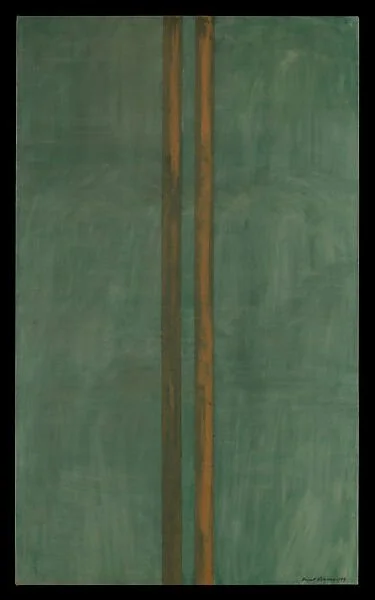
Barnett Newman - Concord 1949
Newman - the ‘Zip’, Line Paintings
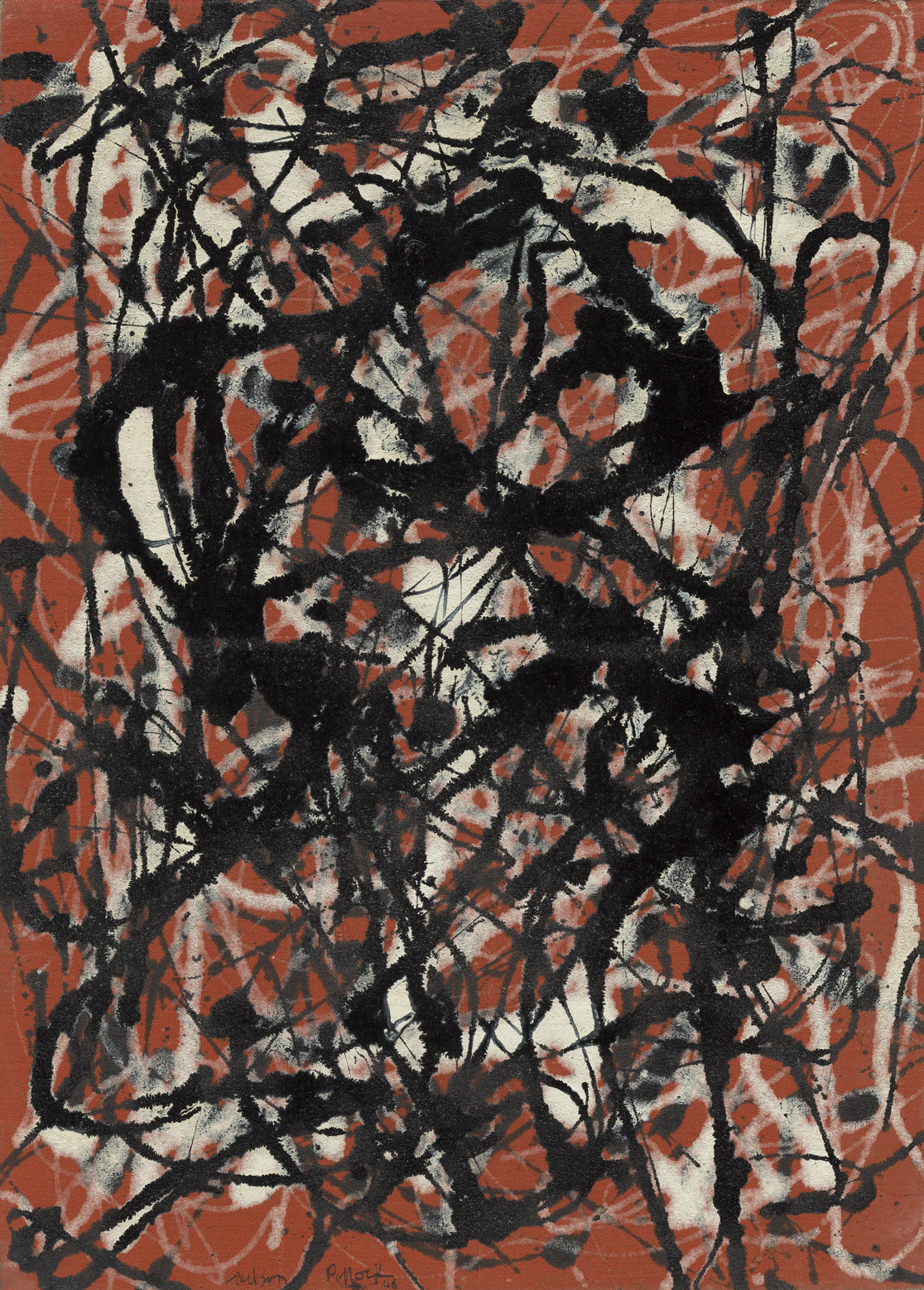
Jackson Pollock. Free Form. 1946
Pollock - Drip Paintings
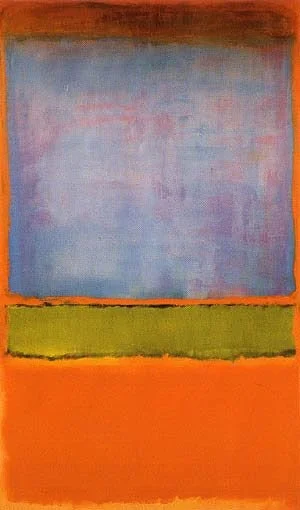
Rothko - No. 6
Rothko — two squares of color
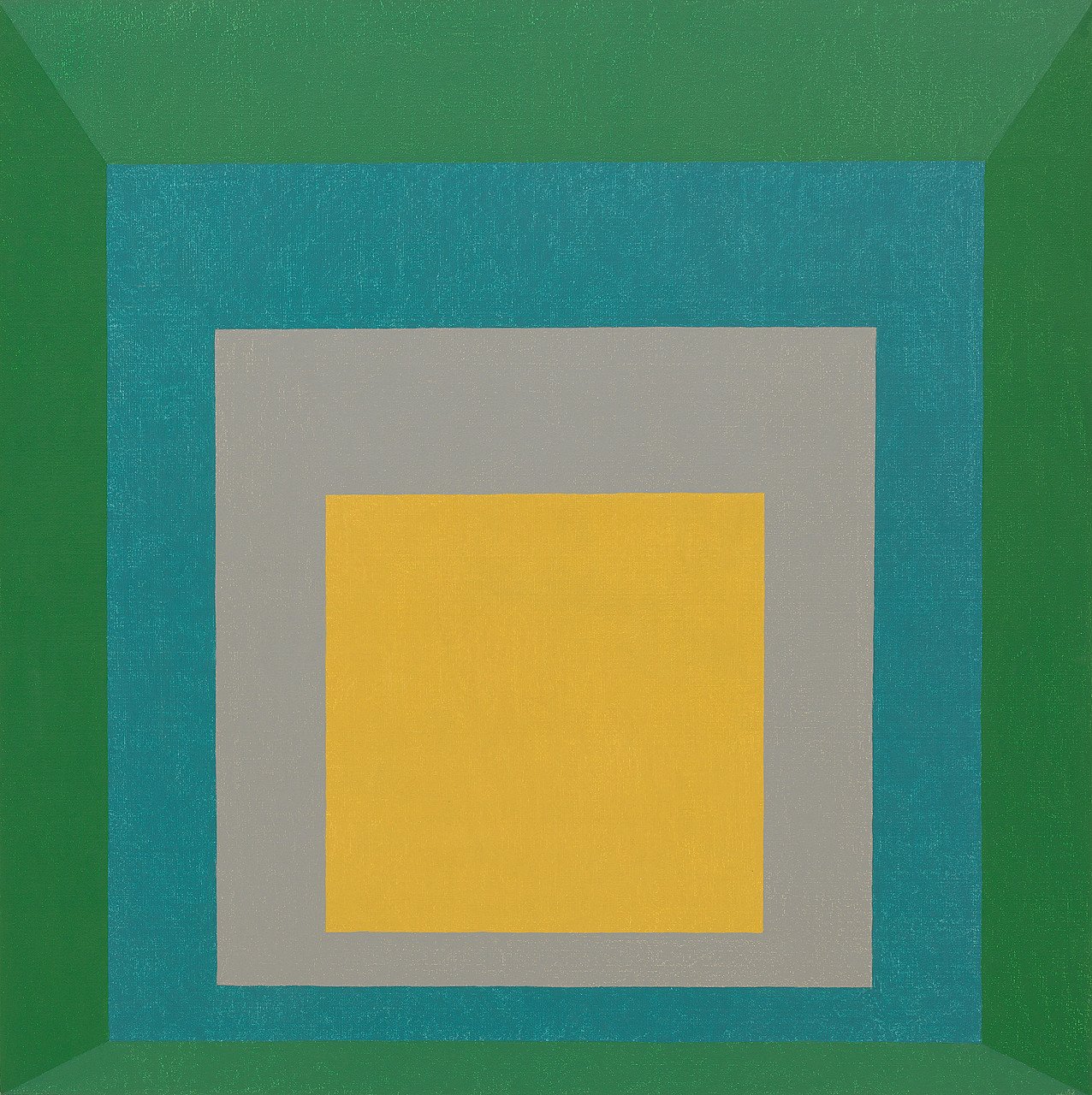
Albers Homage to the Square, 1959
Albers — squares within squares of color
I'm joking... kind of. I’m also not. You can summarize almost all of the major art figures of the 20th century like this.
It often feels as though artists of that era became known for a particular visual device and then spent the rest of their careers exploring endless variations of it.
I consider Marden part of the generation that followed Rauschenberg, Johns, and Twombly.
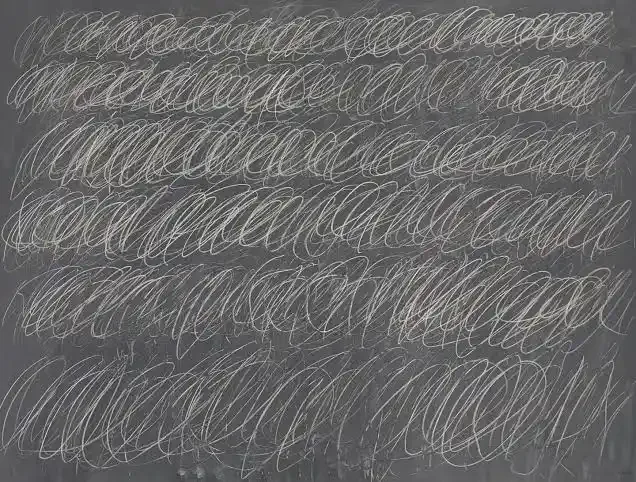
Cy Twombly Untitled (NCY - 1968)
Twombly cornered the illegible-doctor-handwriting market, by the way.
Ithink that Marden was undoubtedly hyper influenced by art theory of his day. He went to Yale and worked for Rauchenberg after college. Marden was as ‘in’ and ‘connected’ into the art world as any up and commer artist could be. and was undoubtedly talking art theory with endless Rauchenberg sicophants.
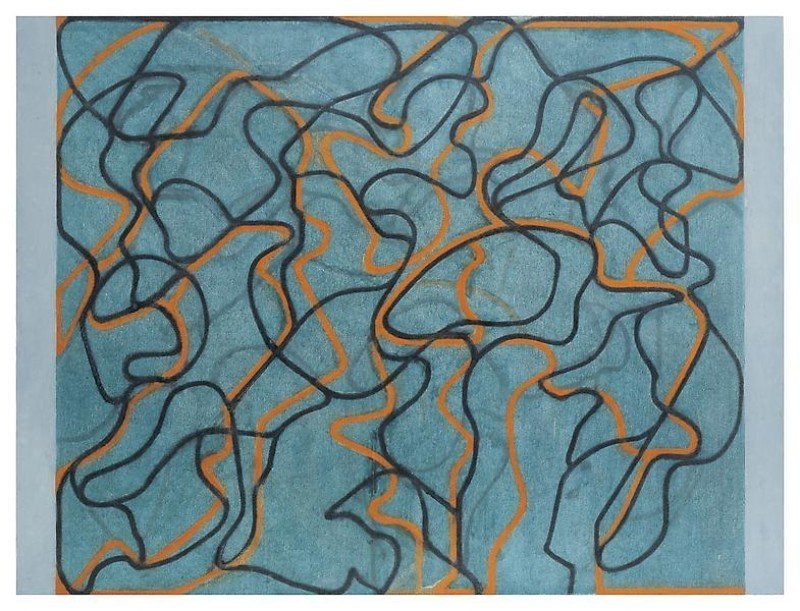
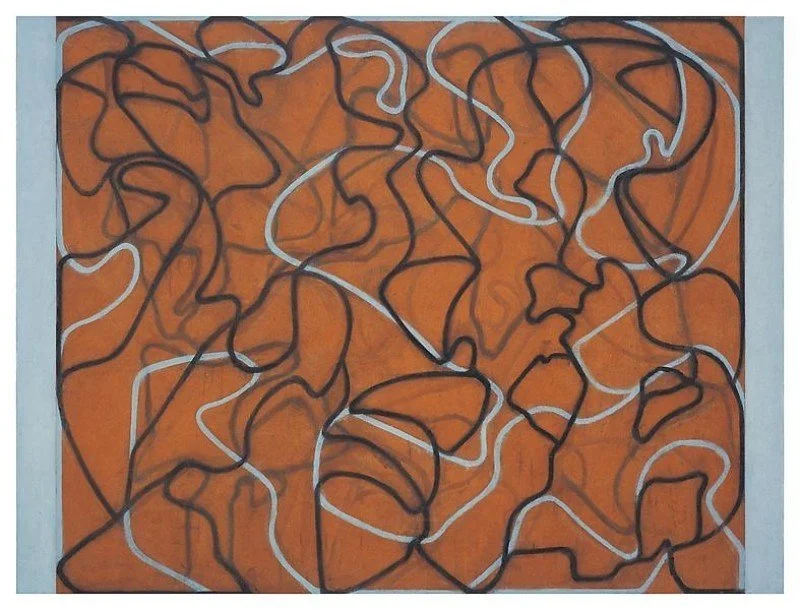
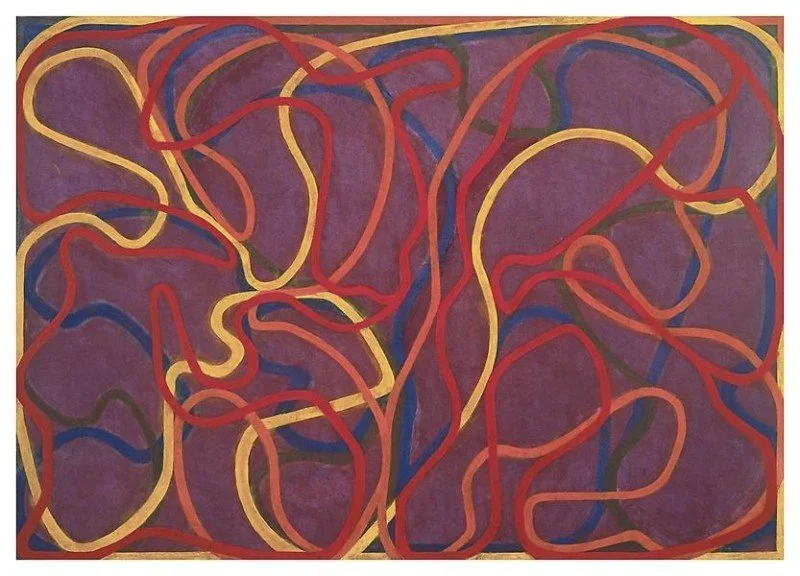
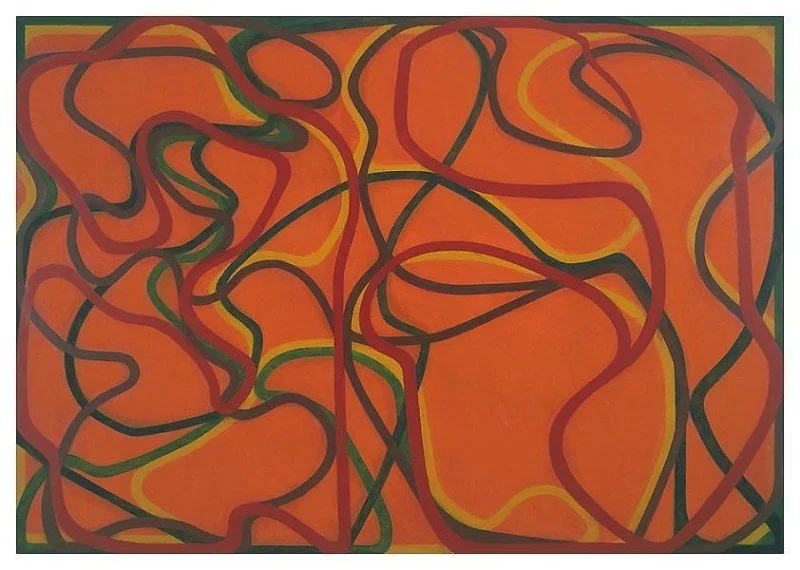
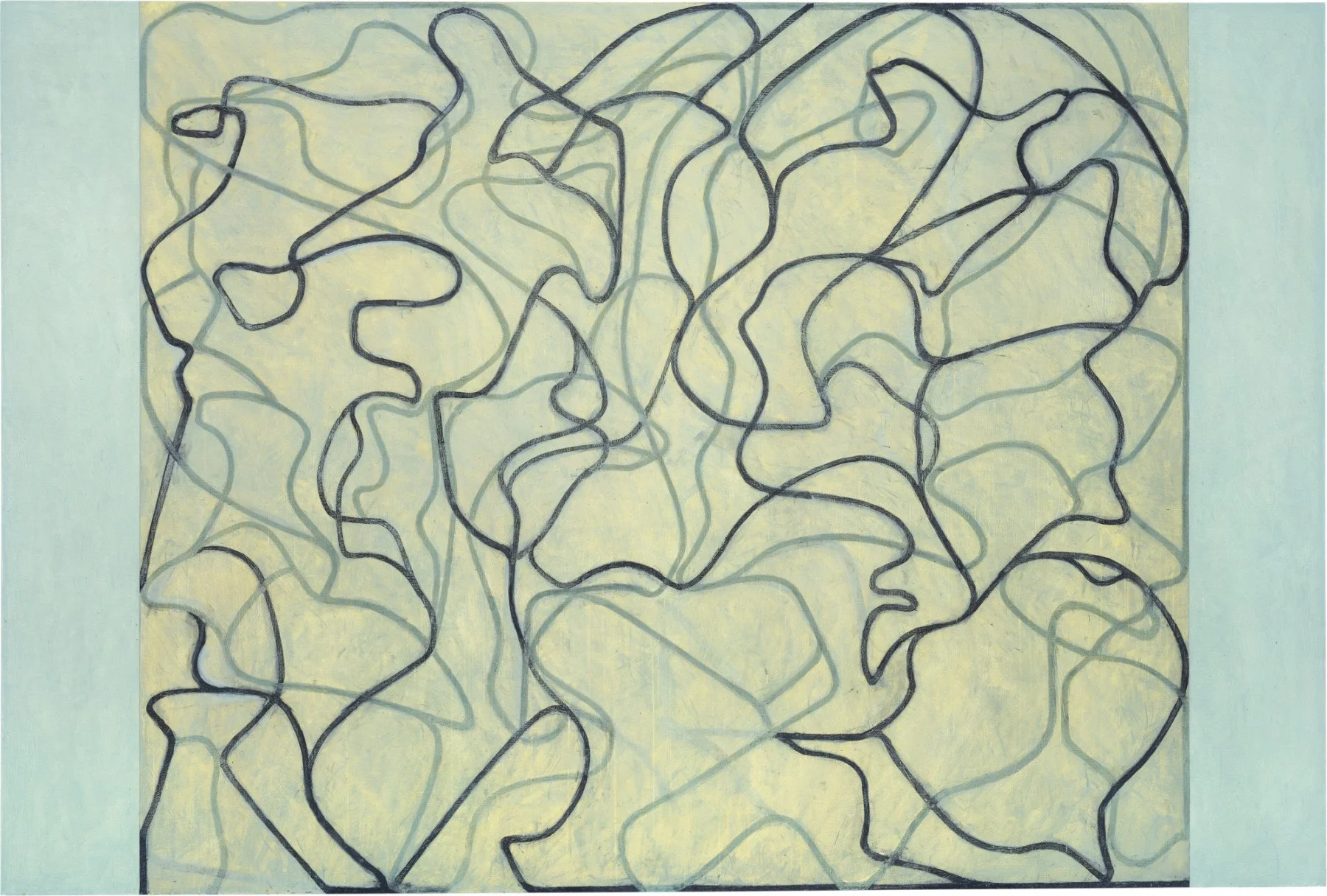
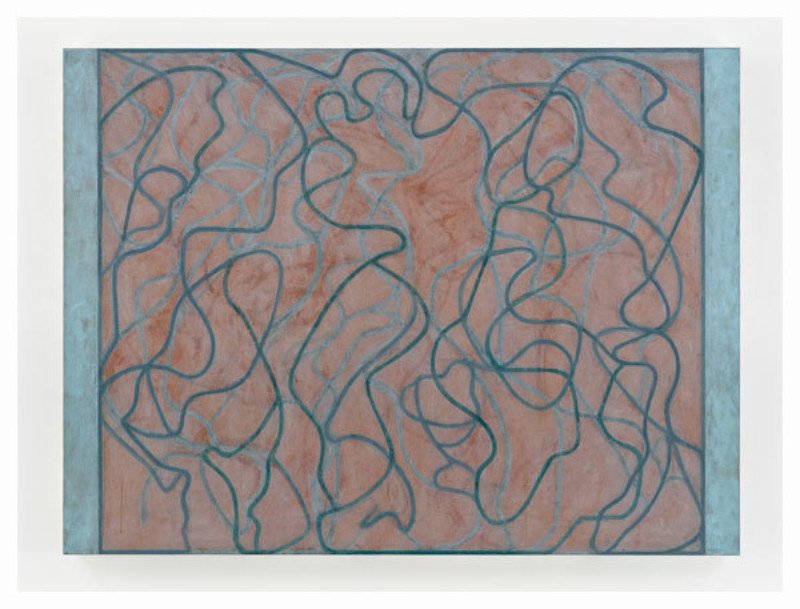
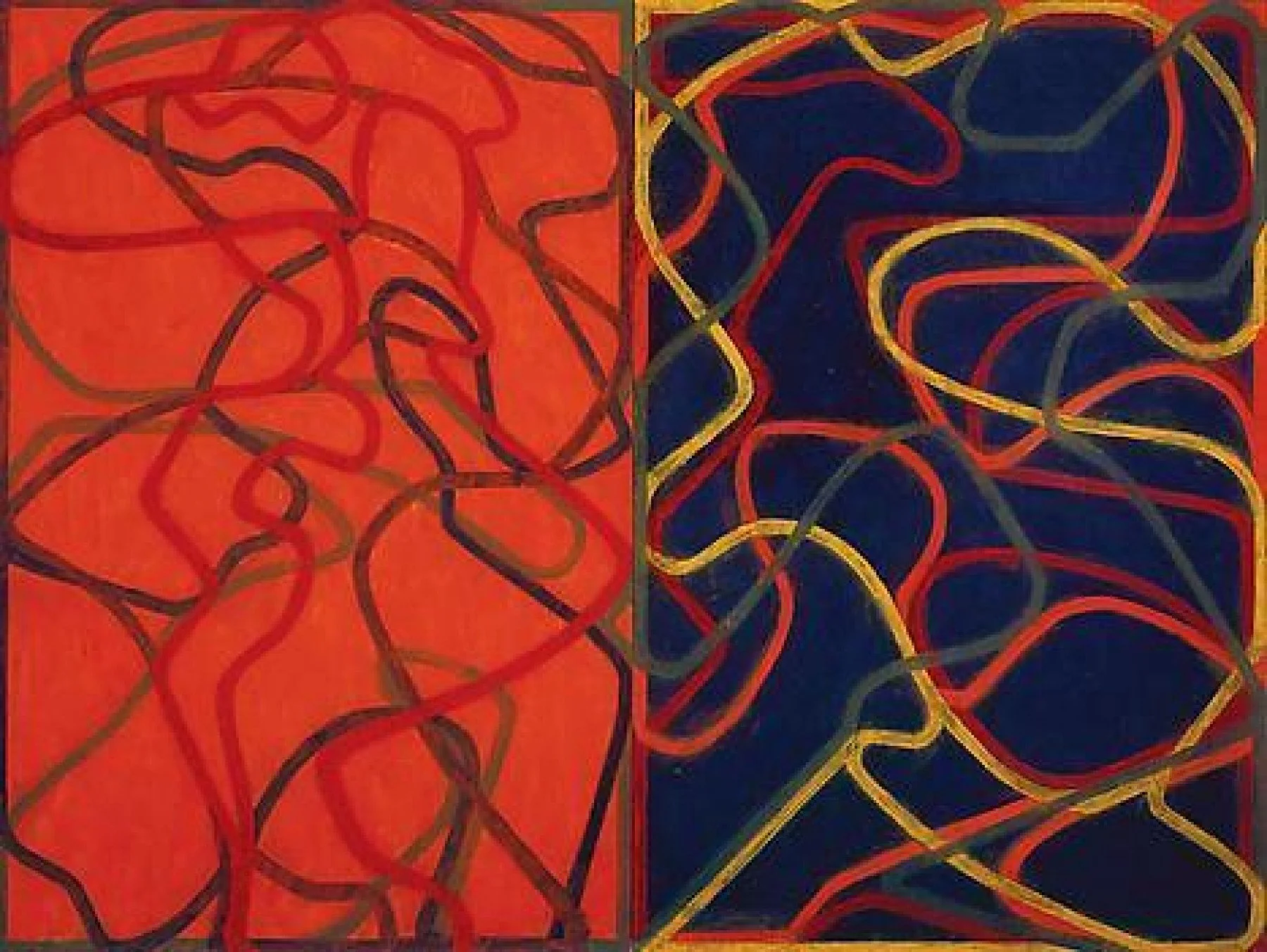
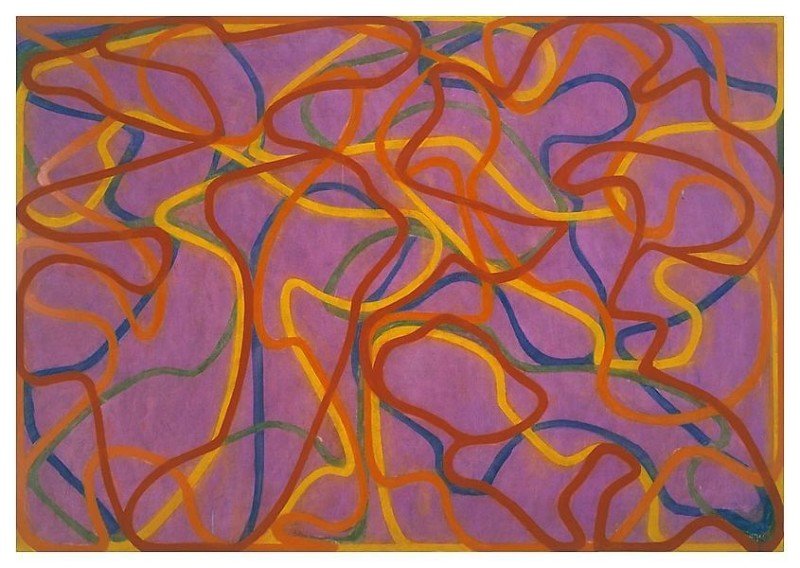
So when I look at a mature Marden painting, one of his ‘line paintings’, I’m seeing someone that built these really rigid rules for himself. These self imposed rules I’m imagining him including self imposed color pallets, and tools to facilitate a process that included him applying the lines with the stick in a precise manner while not being any way representational.
I think something happened to around 70 years of artists that went through college post WW2 to around 2010. Artists in school were taught theory instead of skills. I don’t think that Marden ever learned to confidently draw figuratively. It is my belief in looking at his work and studying who he was, that Marden was terrified of representation of any sort. This is a man who spent his entire lifetime as a world renouned artist.
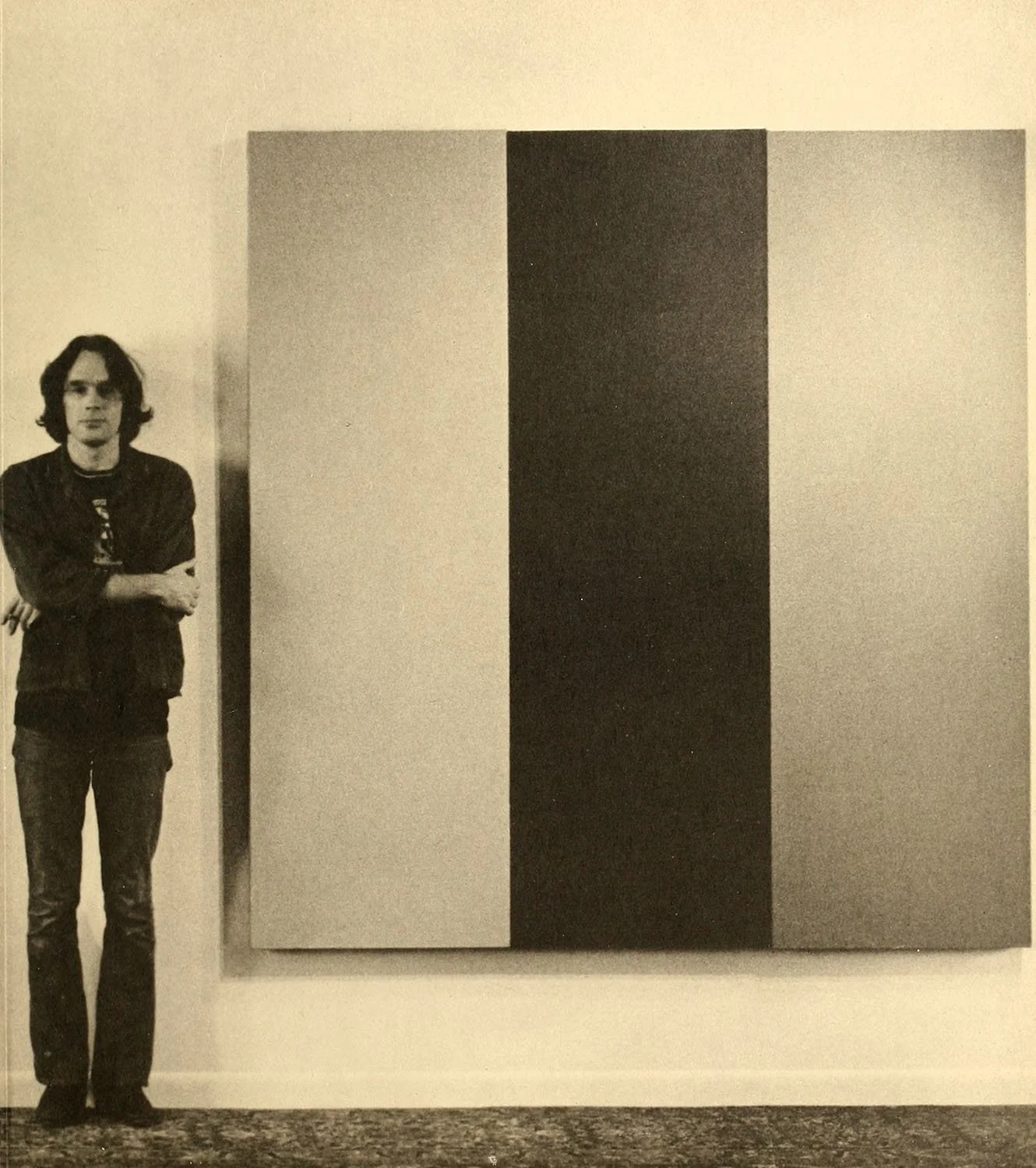
Marden with early work
This image shows Marden still finding his voice. He is still grappling with the Zip lines that Newman championed and had yet to transition to the untested grounds of the grid
Below: Six works from a show of Marden’s early works (1961-64) at the Matthew Marks Gallery:
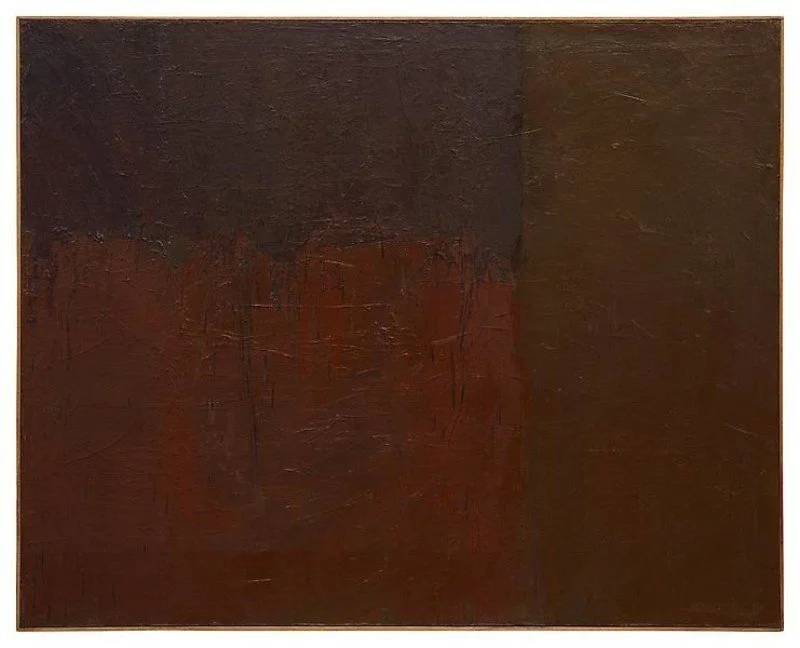
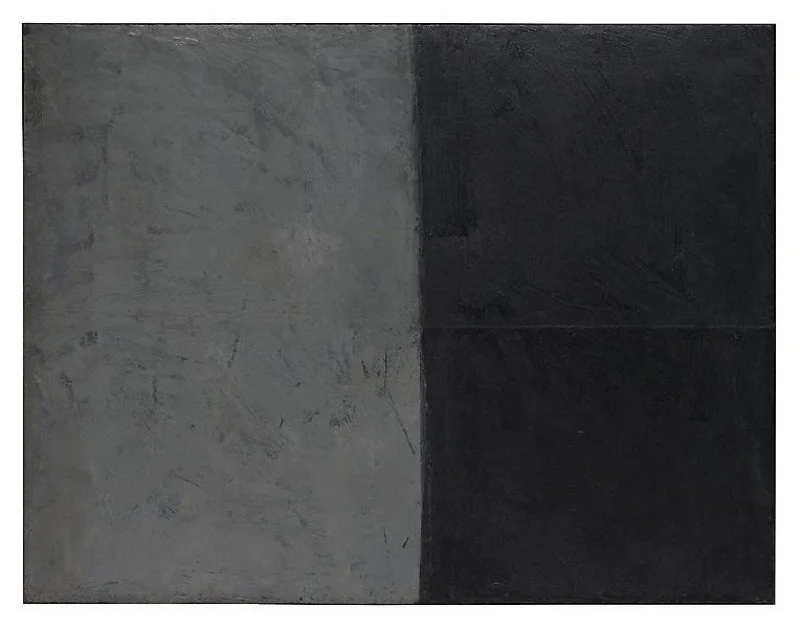
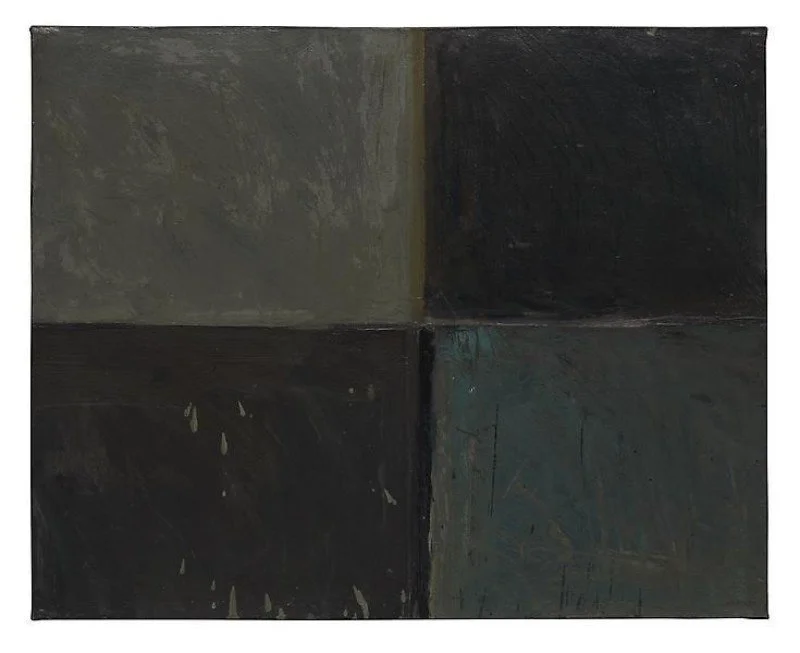
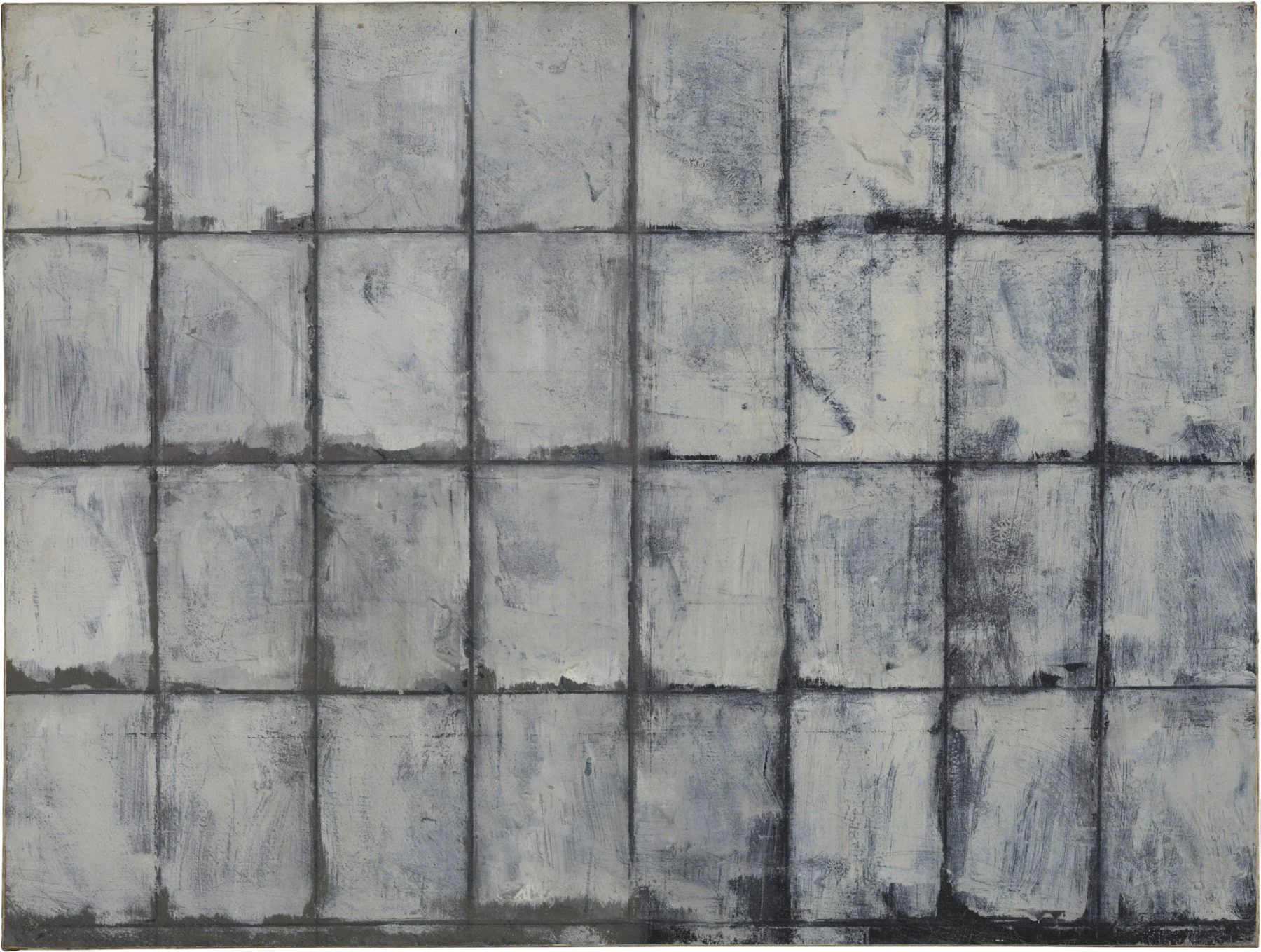
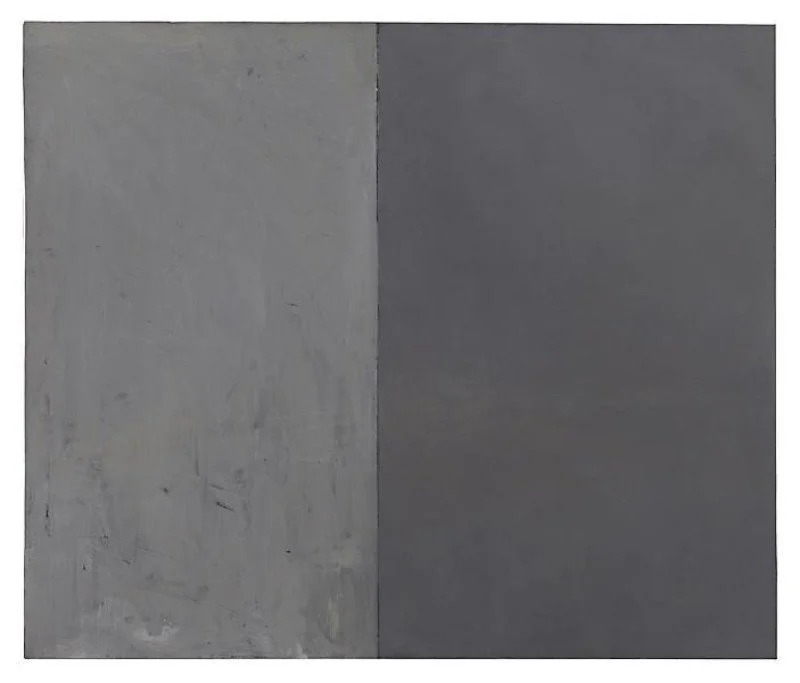
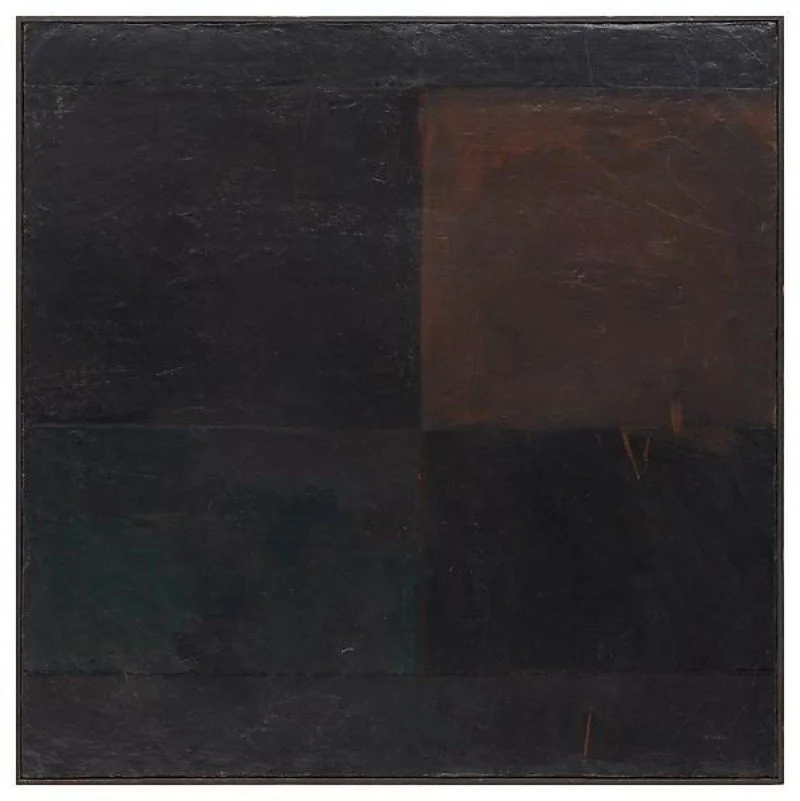
Once Marden found his stride,
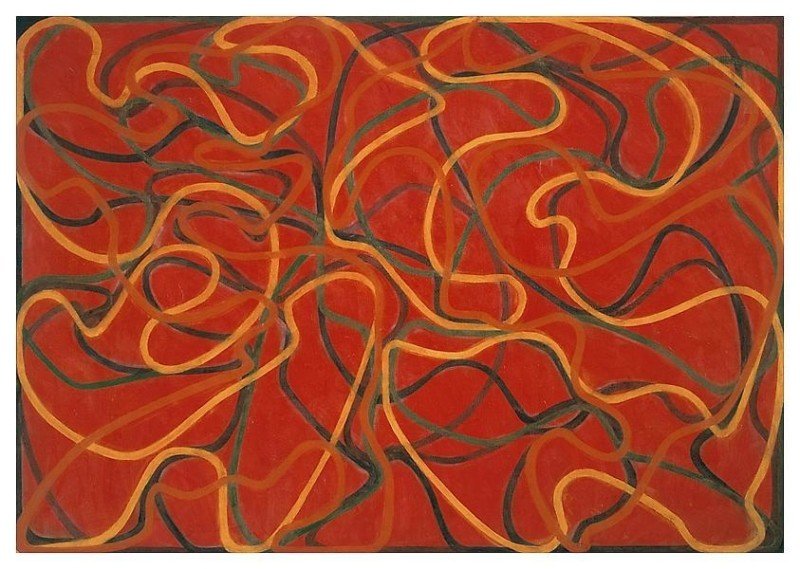
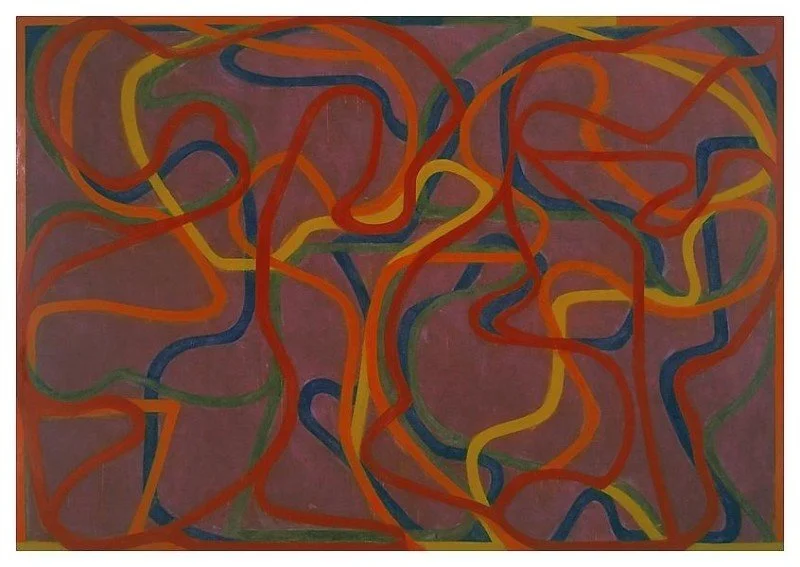
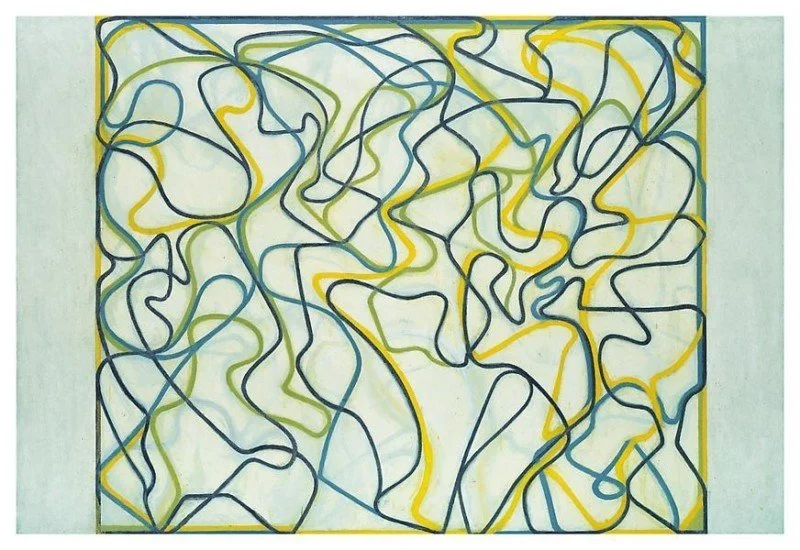
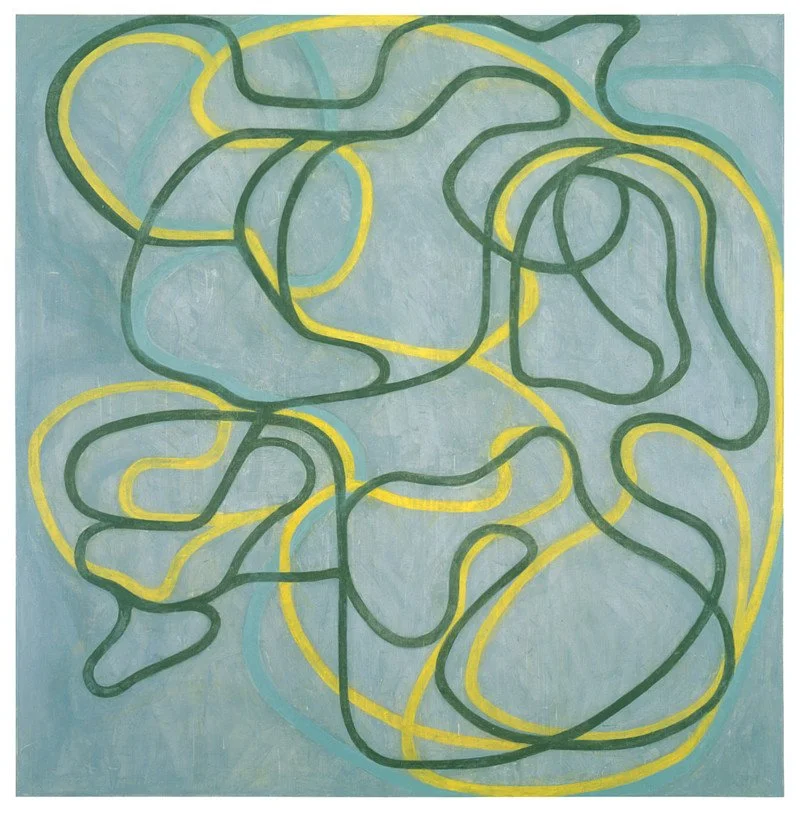
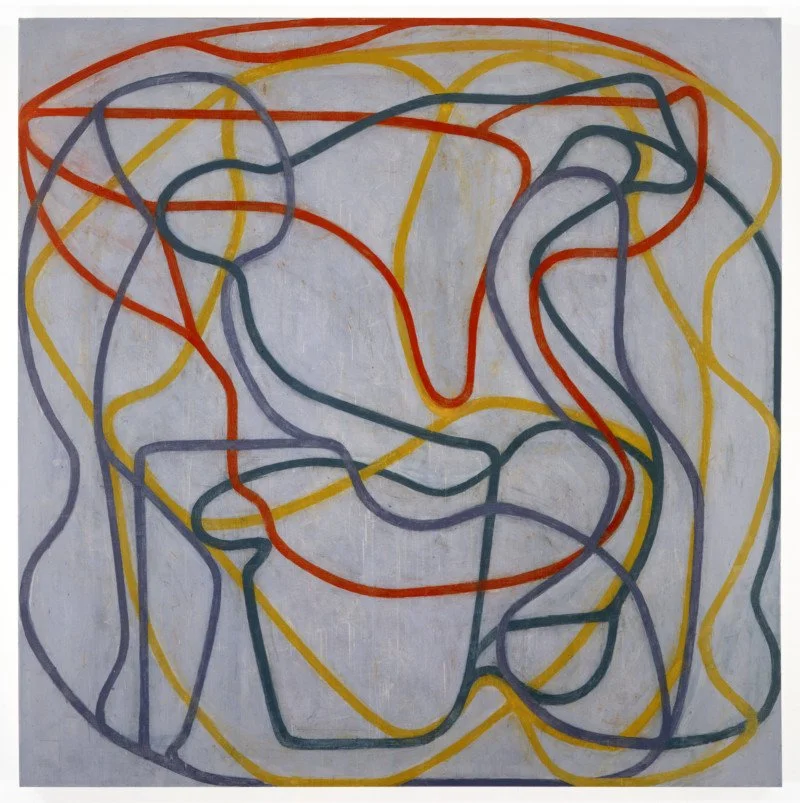
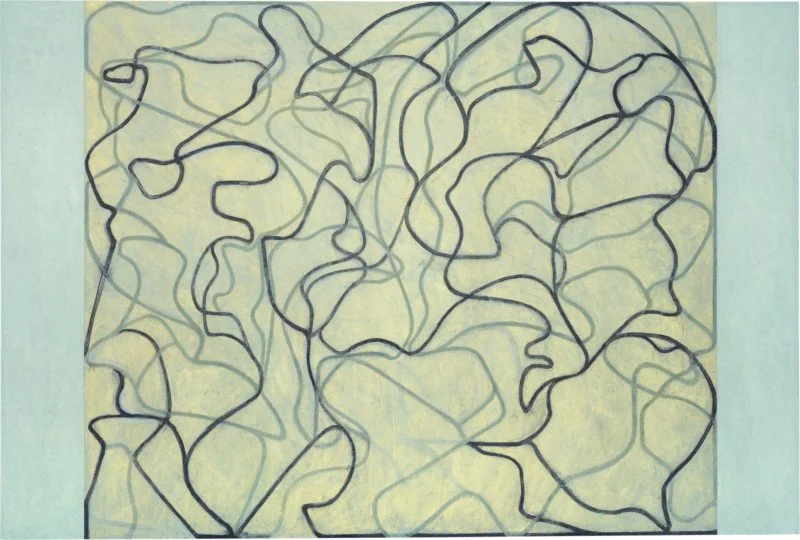
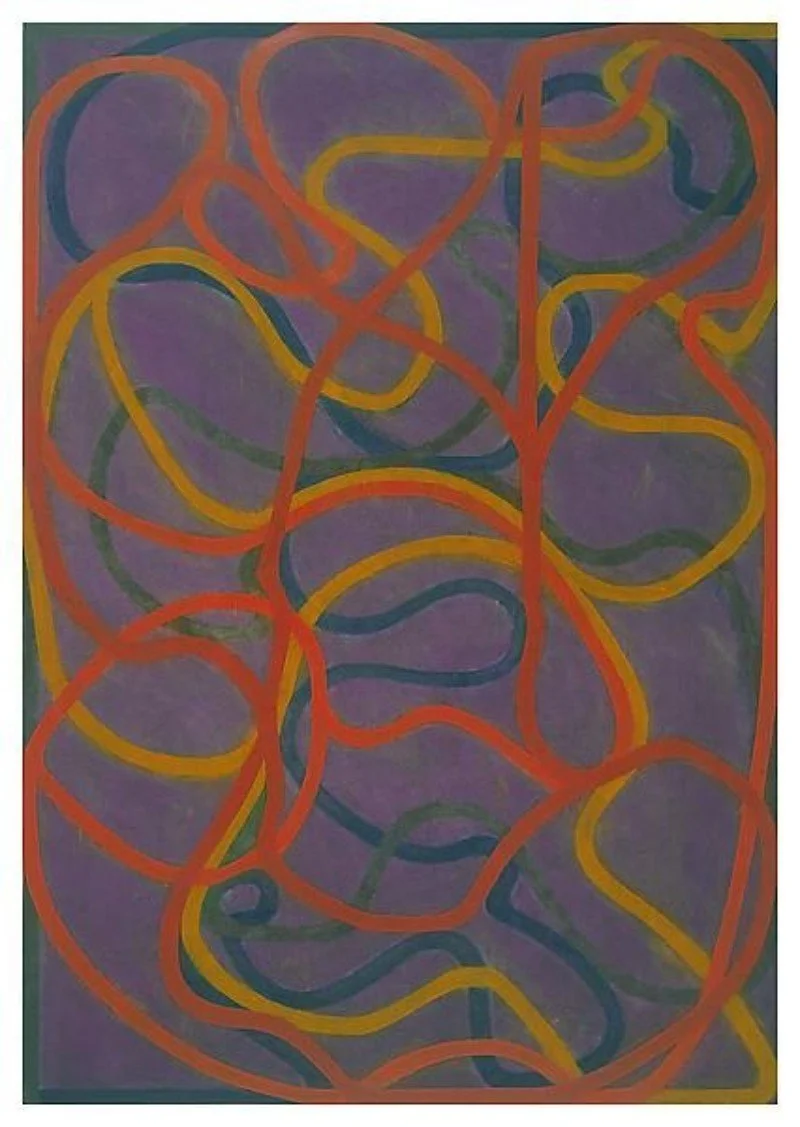
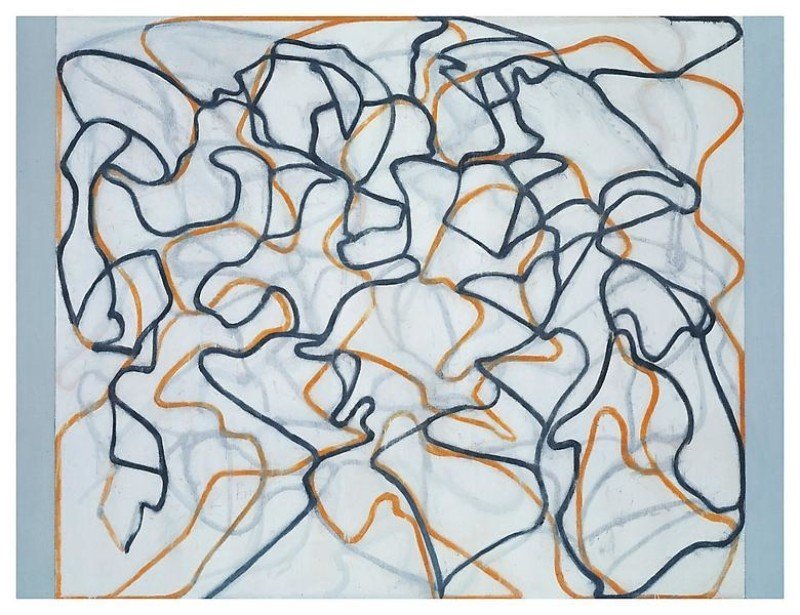
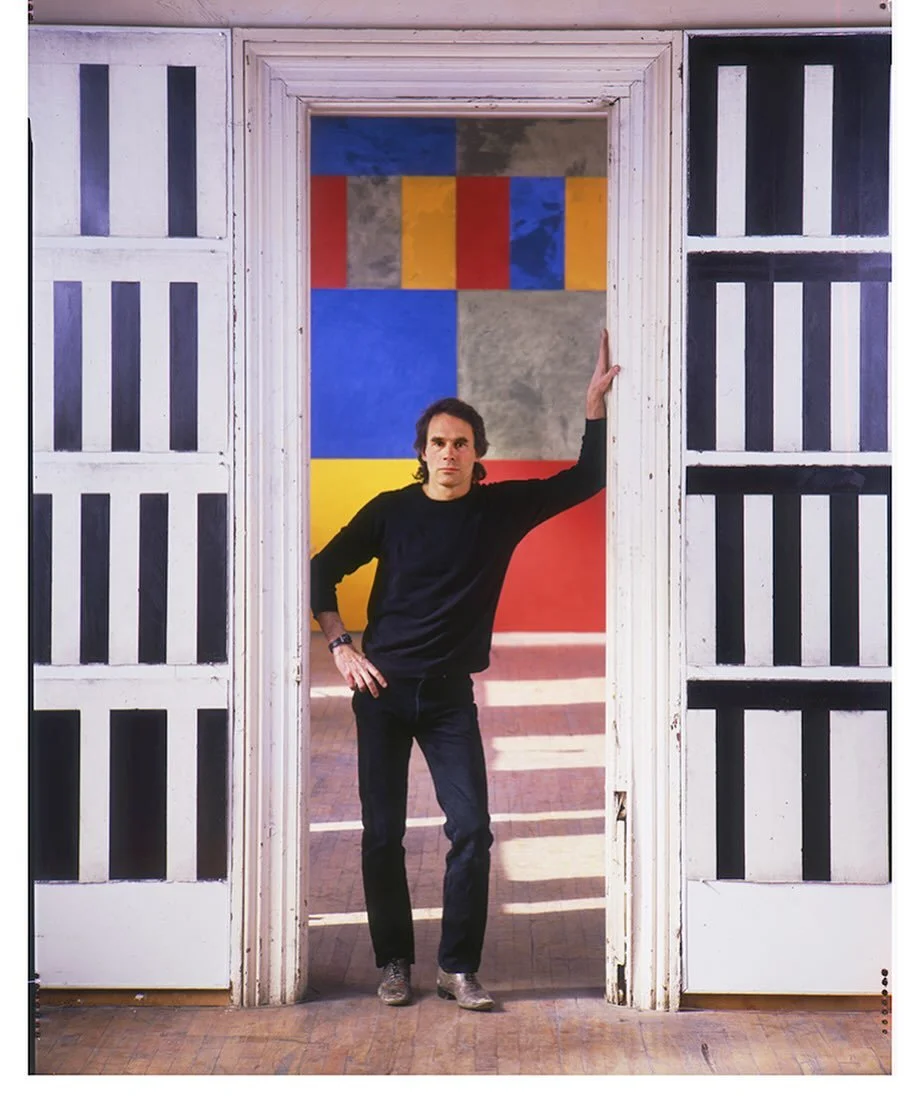
Marden in his studio
This image depicts Marden in the mid 80s still grappling with the Grid
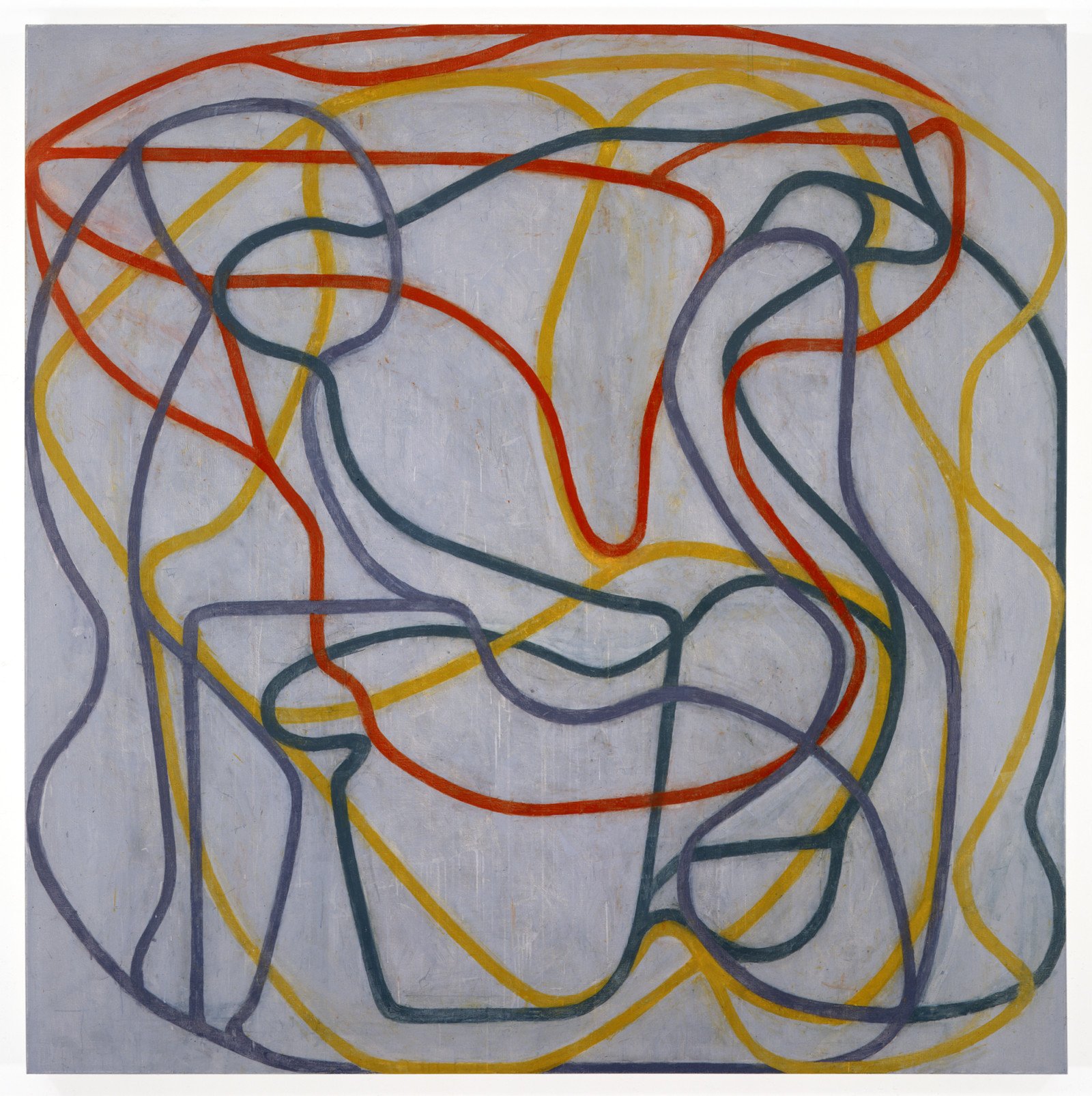
Make it stand out
This painting is indicative of Marden’s mature line painting work (painting is from a 1997 show at Matthew Marks).
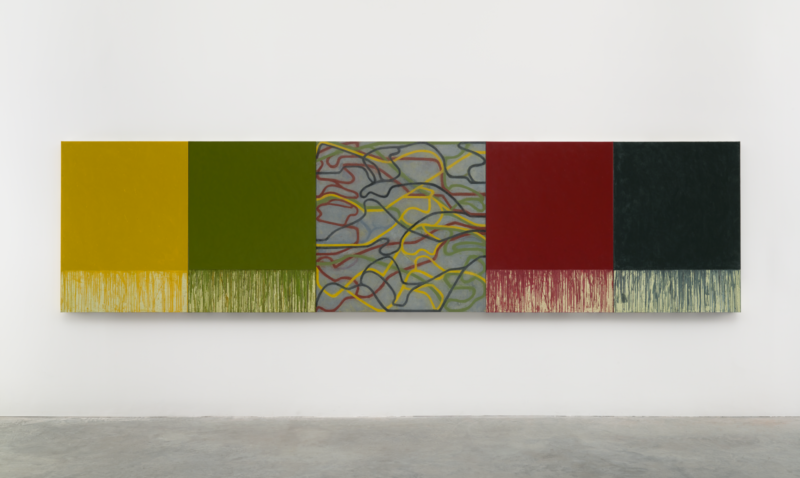
Concensus:
I have little respect for Marden. His paintings are starting to sell for up to $50 million each in private sales. Personally, I don’t see it. I also feel that an artist who’s estate is being valued at many billions of dollars deserves to be judged with a heavy hand.
I honestly don’t think Marden explored much other than in undertaking the act of confining his practice to the narrowest of focuses. Nothing Marden did was unique for his time. There were 1000s of people who spent their lifetimes practicing art in almost identical patterns as marden. Many 1000s of people who went to school and then tried to make it in the artworld of NYC and the confines the artworld put on itself in this time period.
The curious thing for me is Marden spent so much time as an assistant to Rauchenberg. This time didn’t break Marden out of his self created contained patterns. I’m kind of surprised because one of the few artists working at this time who didn’t tow the Greenberg line was Rauchenberg.