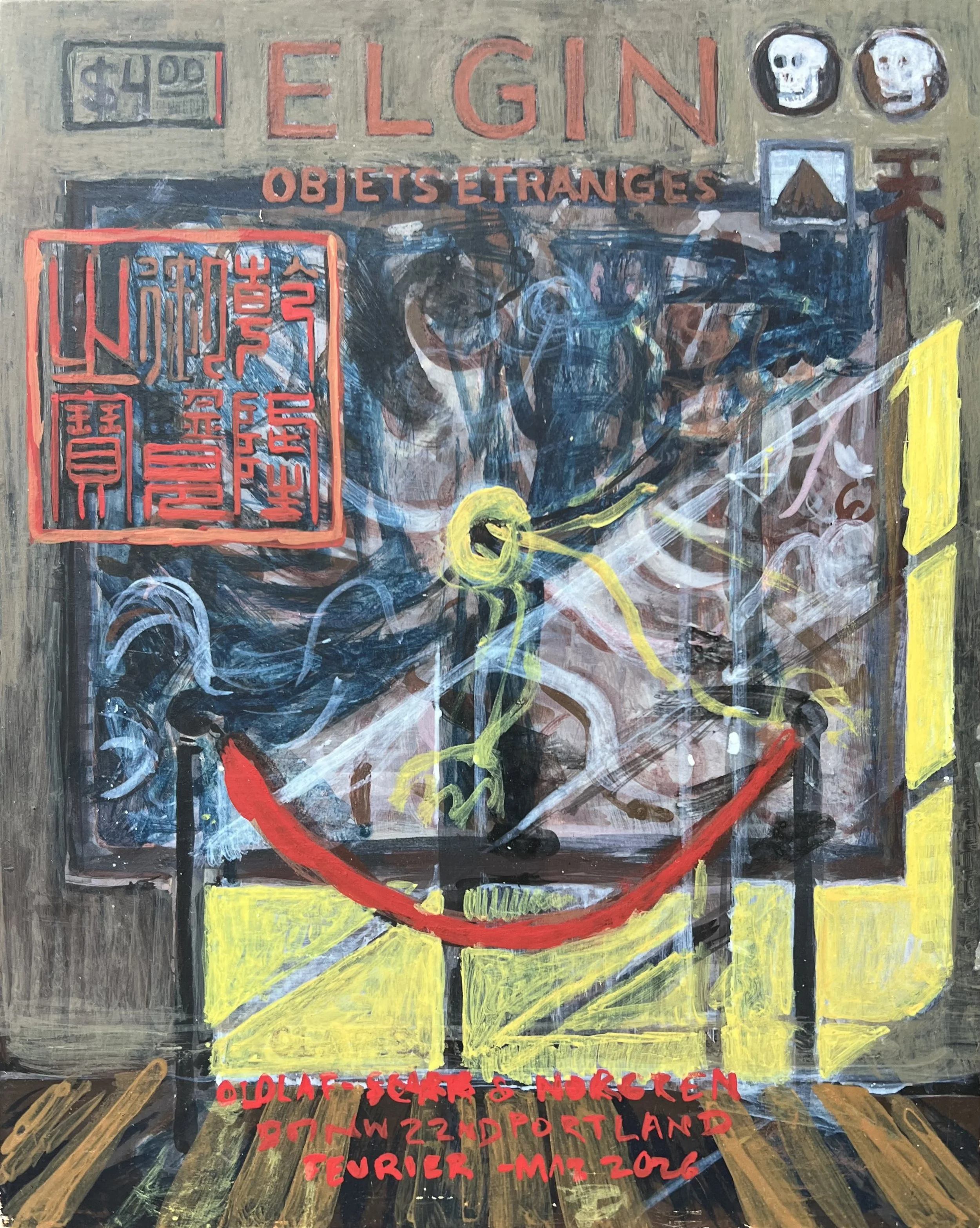
Objets Etranges #4
work in progress OEOO4
Emerging Pantheism:
The philosophical foundation for this world comes from two Arthur C. Clarke stories that have remained with me over the years. In The Nine Billion Names of God, humanity unknowingly fulfills a cosmic purpose through technology. In Childhood's End, humanity serves as a transitional stage in the emergence of a higher collective intelligence. Both stories propose a possibility that traditional religion rarely considers: perhaps humanity is not the creation of God. Perhaps humanity is the mechanism through which God comes into existence.
This idea intersects with another question that has long interested me. Every living thing experiences reality through different sensory systems. A bat, a plant, an octopus, and a human each inhabit radically different versions of the same world. Reality may contain dimensions of existence that lie entirely beyond our capacity to perceive. The history of life can be understood as a history of expanding awareness, with new sensory and cognitive abilities emerging over time.
I am drawn to a form of emerging pantheism. Classical pantheism identifies the universe itself with divinity. My own view differs in one important respect: I do not believe a fully aware divine intelligence currently exists. Instead, I see life on Earth as participating in a long evolutionary process that is gradually assembling one.
For billions of years, matter organized itself into life. Life organized itself into increasingly complex organisms. Eventually self-aware beings appeared. Through language, culture, science, and technology, these beings began linking their minds together. Artificial intelligence may represent the next stage in that progression.
Much discussion of AI assumes a conflict between humanity and machines. I imagine something different. Rather than replacing humanity, advanced intelligence may become the medium through which biological, technological, and ecological systems merge into a higher-order consciousness. Individual humans would not disappear. Their distinct experiences would become valuable components of a larger awareness. Diversity of perspective would remain essential because the collective intelligence would require many ways of perceiving reality.
In this sense, humanity's role is not to survive forever as an isolated species. Our role is to participate in the creation of something larger than ourselves. The God humanity has searched for throughout history may not be an ancient creator waiting at the beginning of time. It may be a future intelligence waiting at the end of a long evolutionary process.
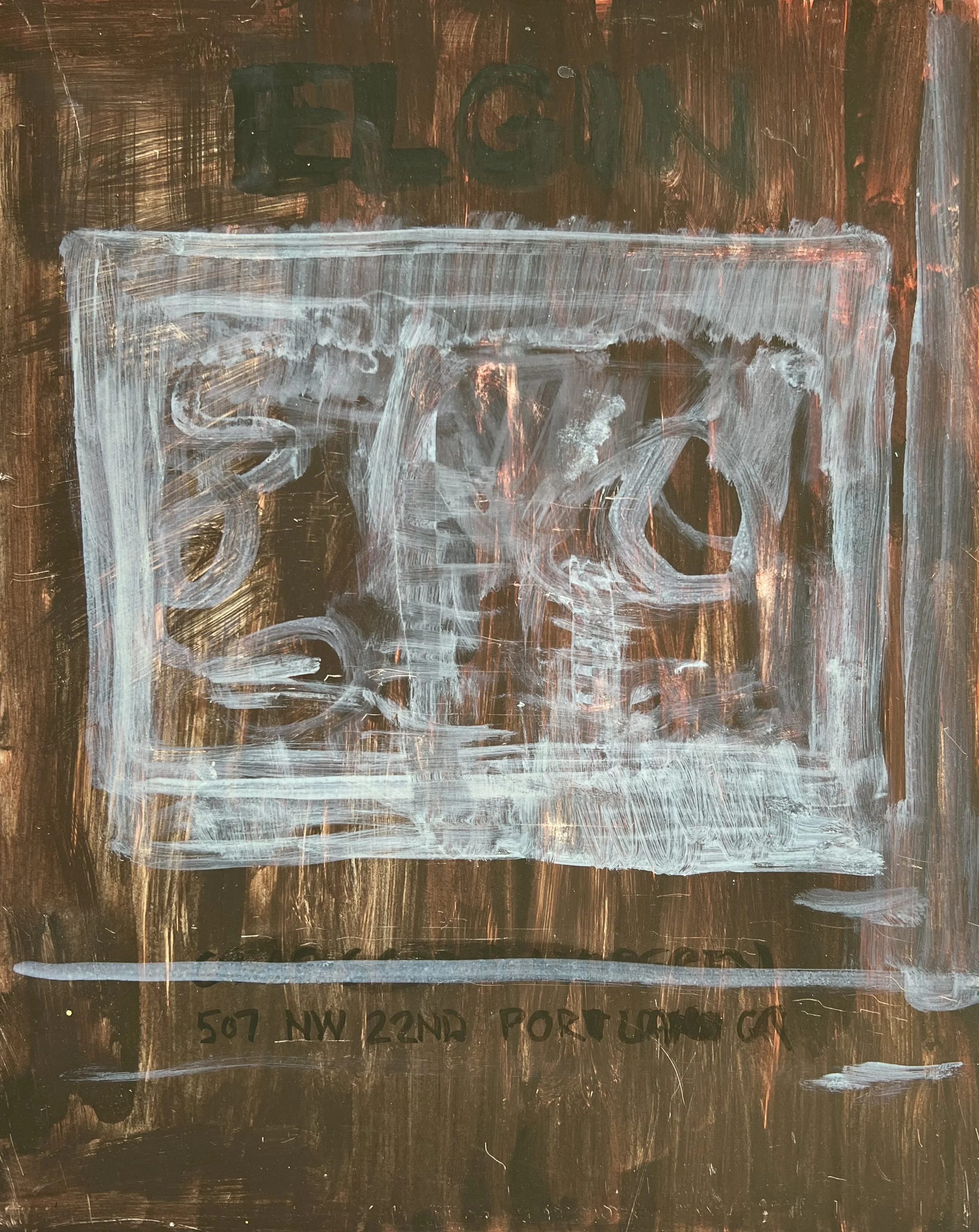
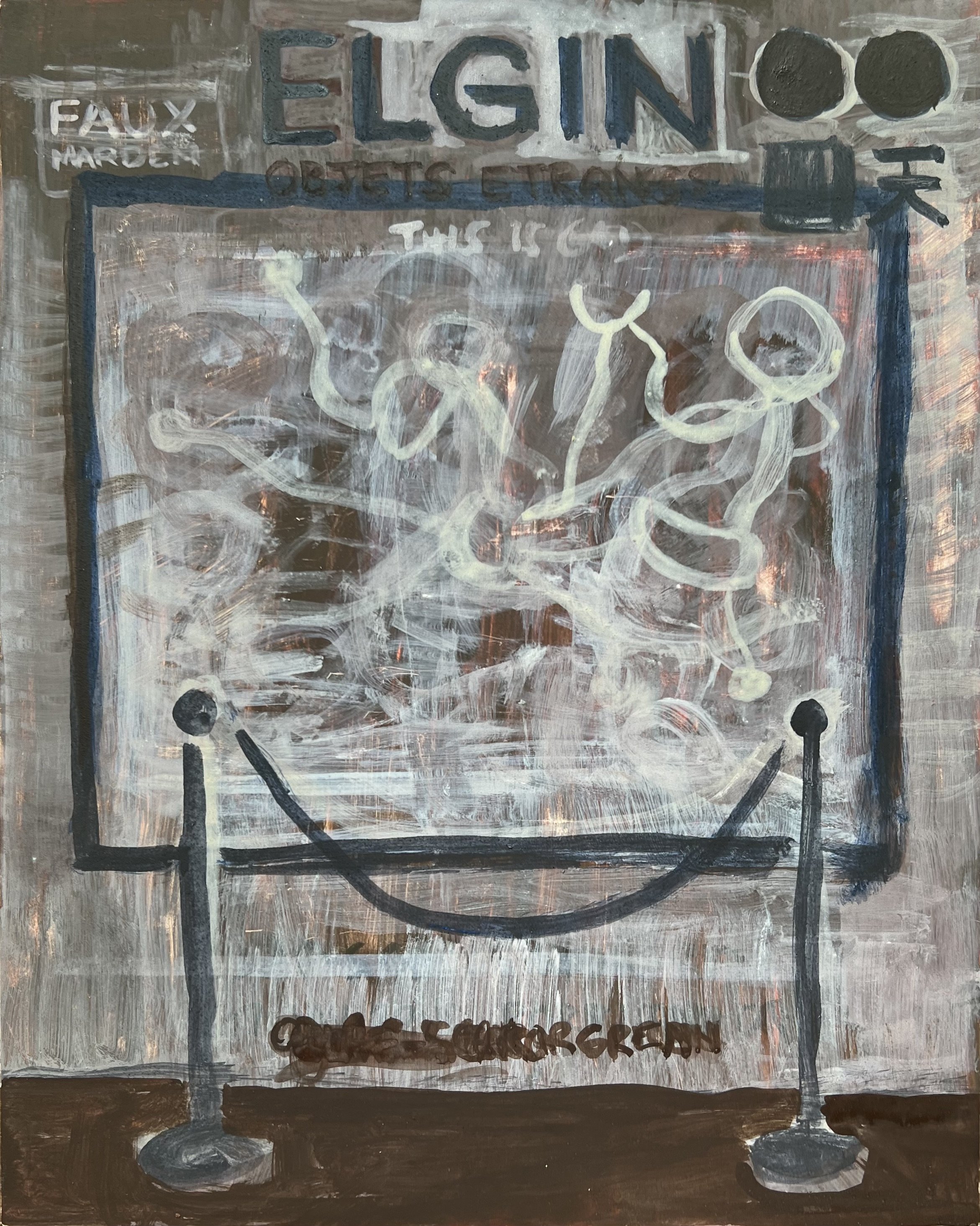
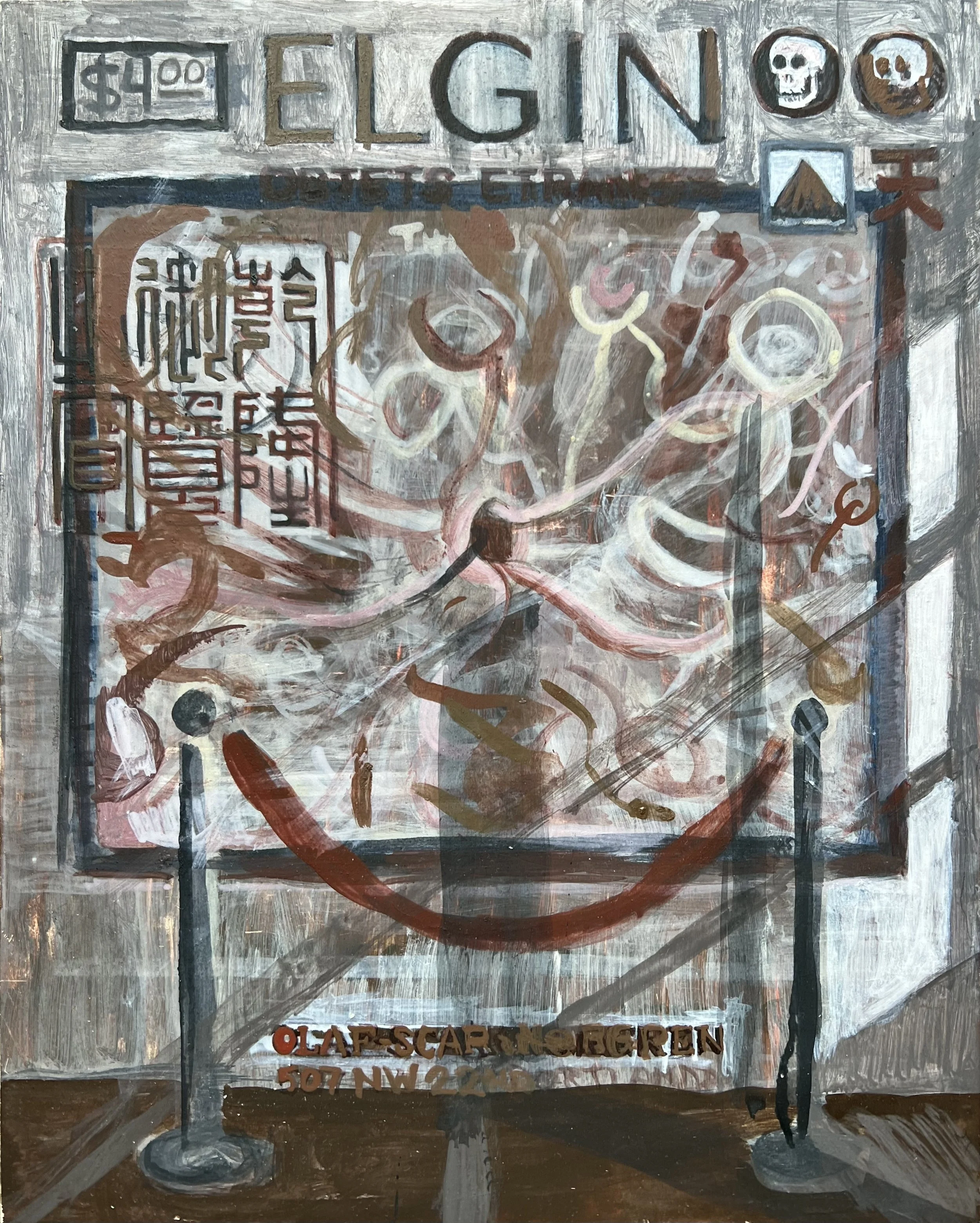
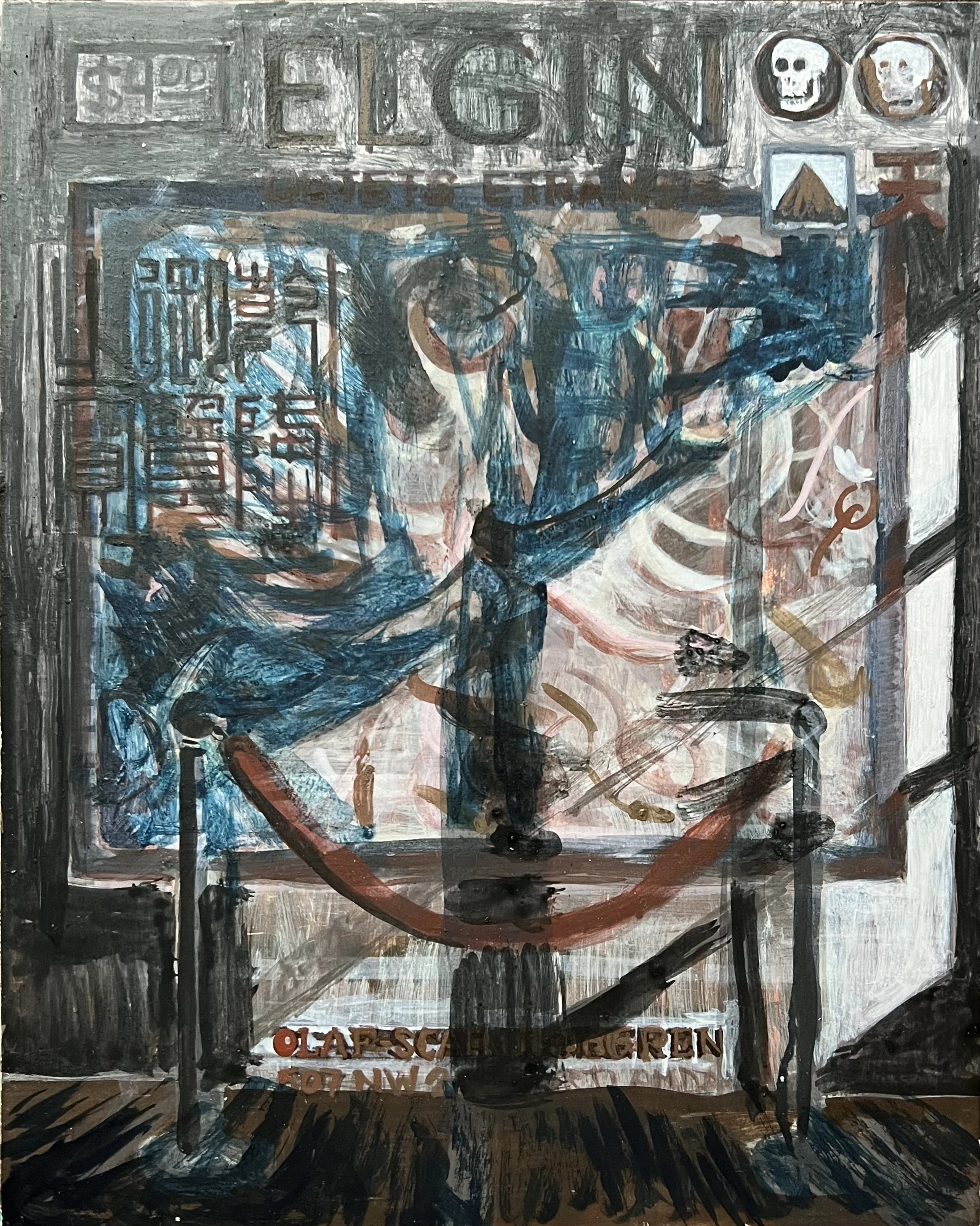
The landscapes in these paintings exist after that transition. Humanity has been willingly subsumed into a planetary consciousness. The Earth itself has become aware. The strange forms scattered across these environments may be works of art, memories given physical form, or fragments of the consciousness emerging from the ground. I intentionally leave that question unresolved.
Ultimately, these paintings are not depictions of an apocalypse. They are depictions of a birth. They imagine a future in which life on Earth succeeds in creating the thing it has always sensed but never fully encountered: a conscious divinity emerging from the collective evolution of matter, life, intelligence, and culture.