
Philosophie De Pacotille #1
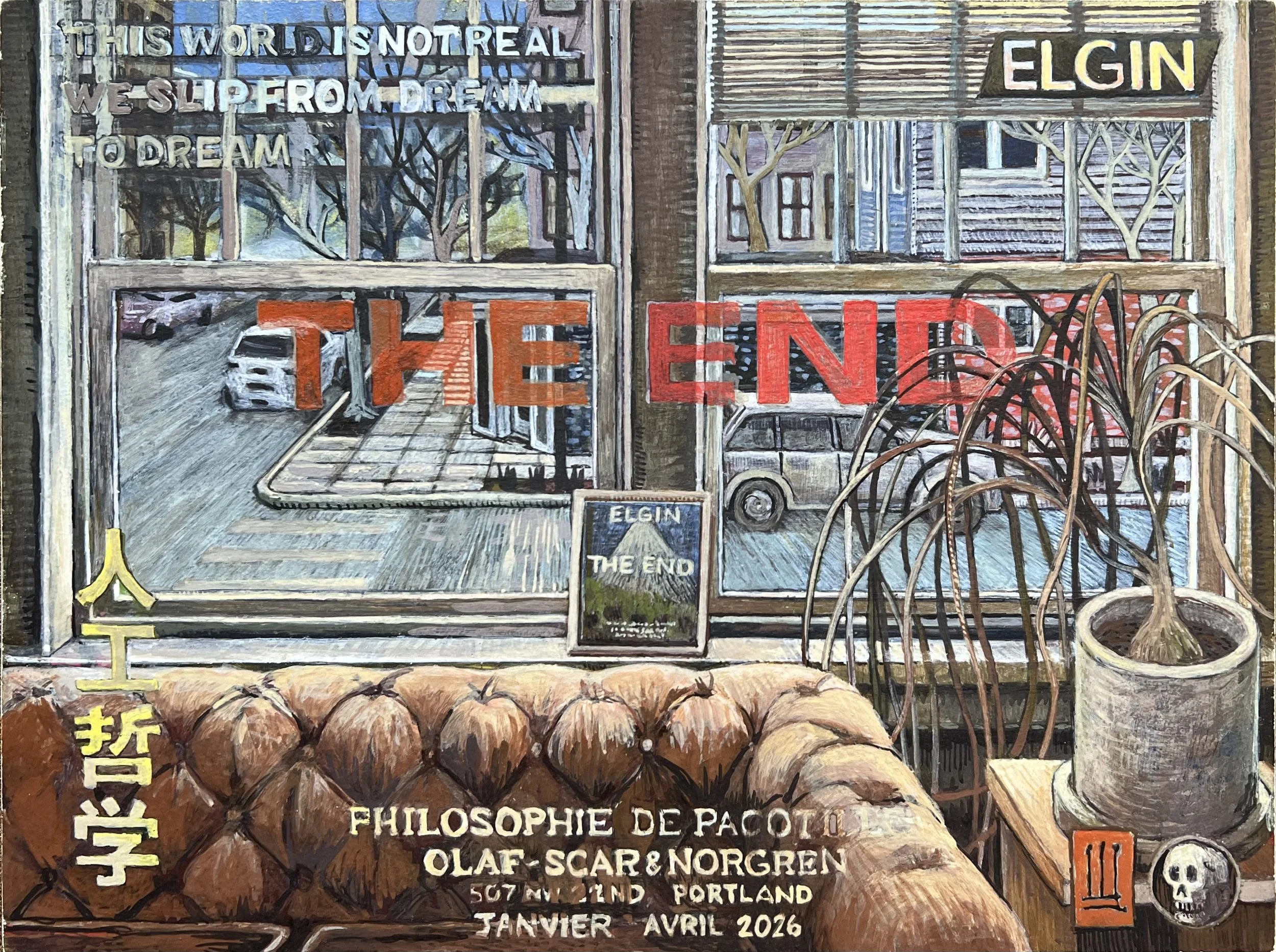
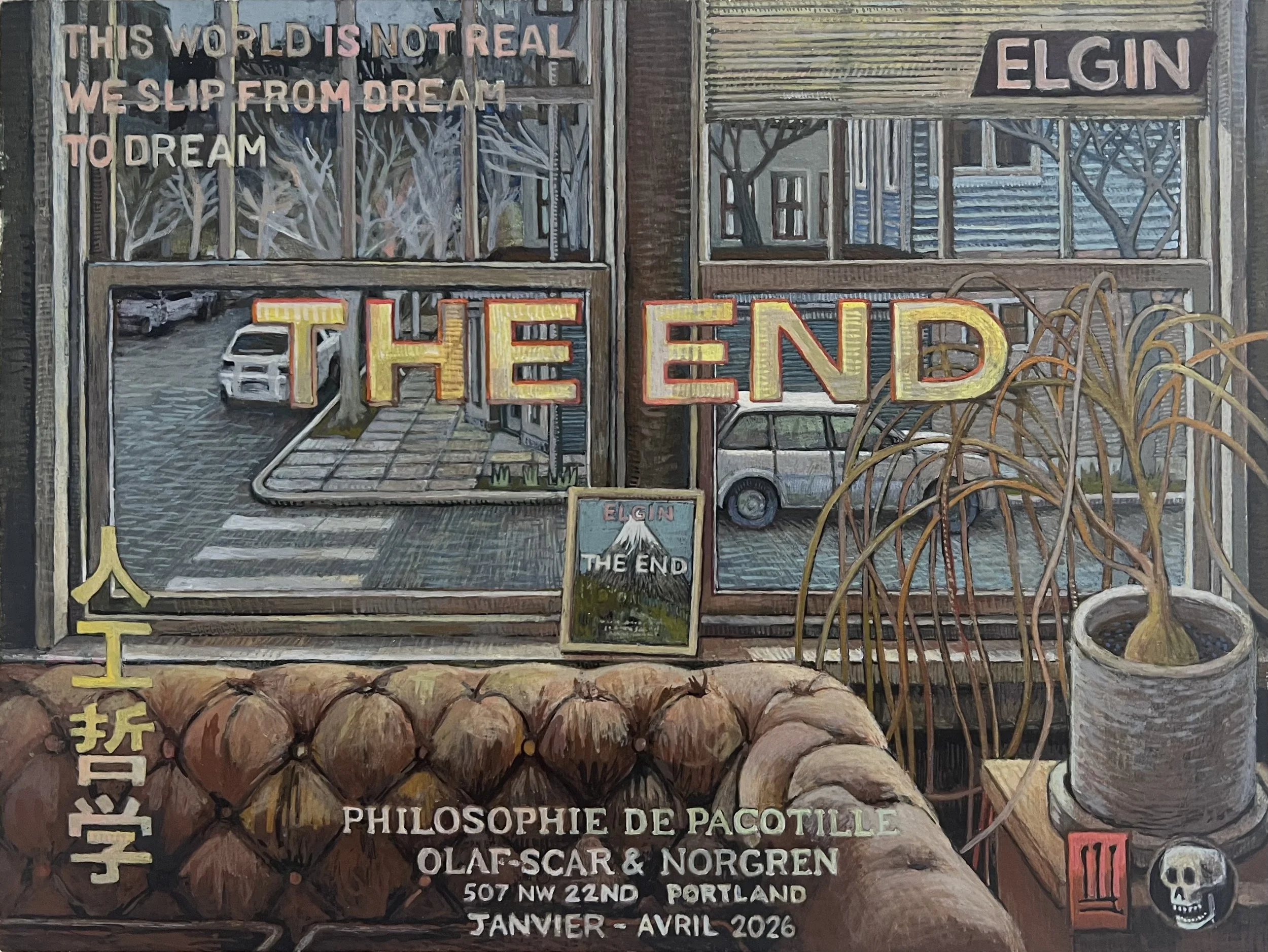
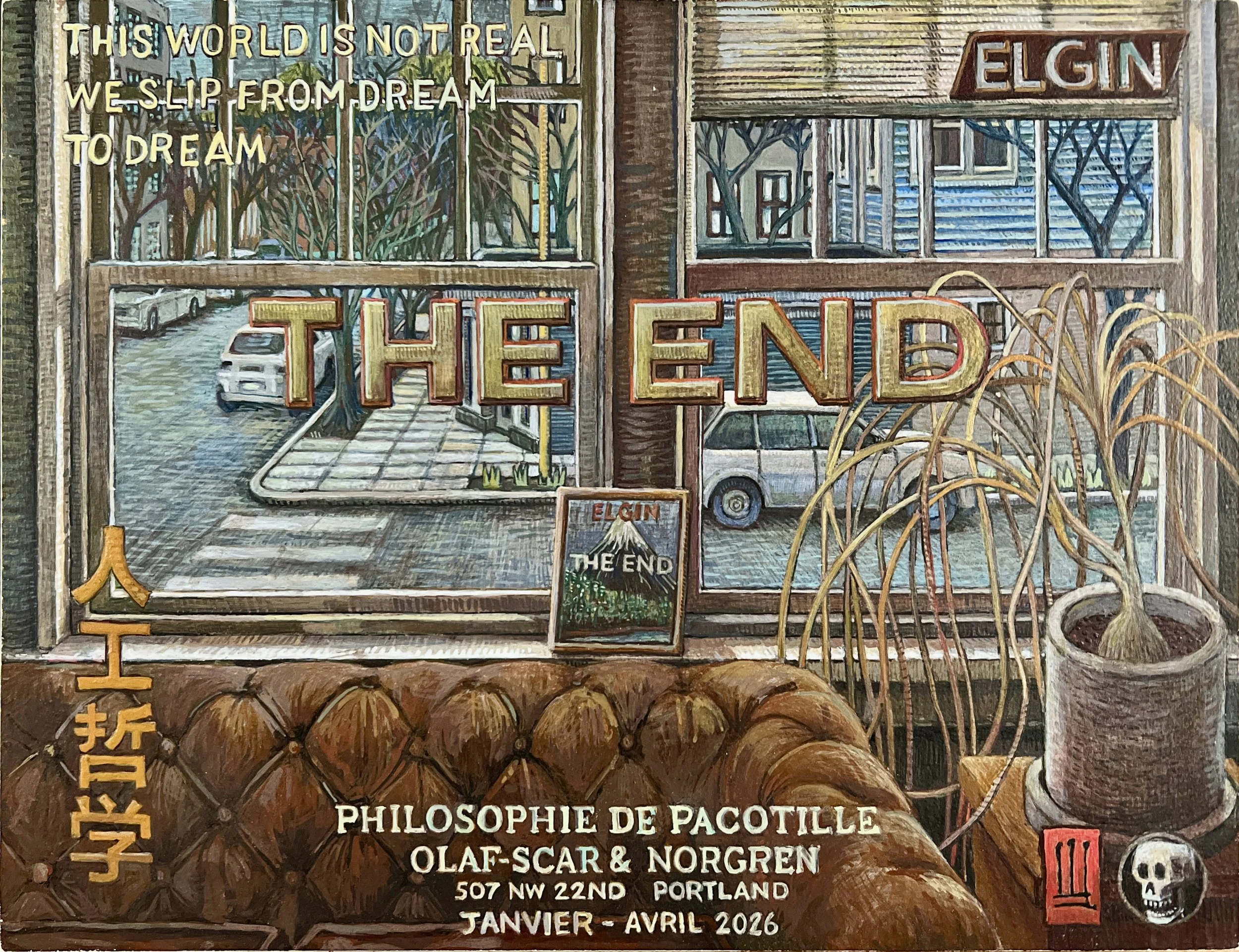
I see this piece as a step forward. The work is beginning to operate in the way I want on two levels.
There is the physical surface (the application of paint and composition)
there is a conceptual layer (the ideas being explored).
Picture-Making
As a medium, egg tempera is fun to work with. I like starting the day by cracking open a fresh egg, taking the yoke, and mixing it with different crushed rock pigments to make pictures.
This painting uses lighter washes of the tempera medium. There is something about thicker gobs of tempera and how it produces a complex surface quality that interests me. The concern is archival stability. I hear thick tempera risks flaking if not handled carefully, so I left this exploration to a minimum in this work.
The piece began as a fast study. It sat on the ground for a couple of months, collecting dust. When I returned to it, I intended to experiment with semiotic and branding elements just to mess with ideas. Once I started working on it again, the composition clicked and I’m really happy with where it has landed.
I’m still new to this medium. I’m finding the more one glazes with the pigments the deeper and more sophisticated the painted surface feels. Maintaining the lighter colors however is challenging because the layering process naturally creates darker tones.
The composition is something I feel good about as well. It can read as very simple, about as straightforward as it gets (it’s a one point perspective). But at the same time, the picture plane is being disrupted. Color, tone, shape, and line all work together to move the eye across the surface in a way that feels satisfying.
I’m concerned because this is a small work. I’m spending so much time on each piece before they are done. I feel like one of those Swiss watch makers who only output 5-6 new watches a year.
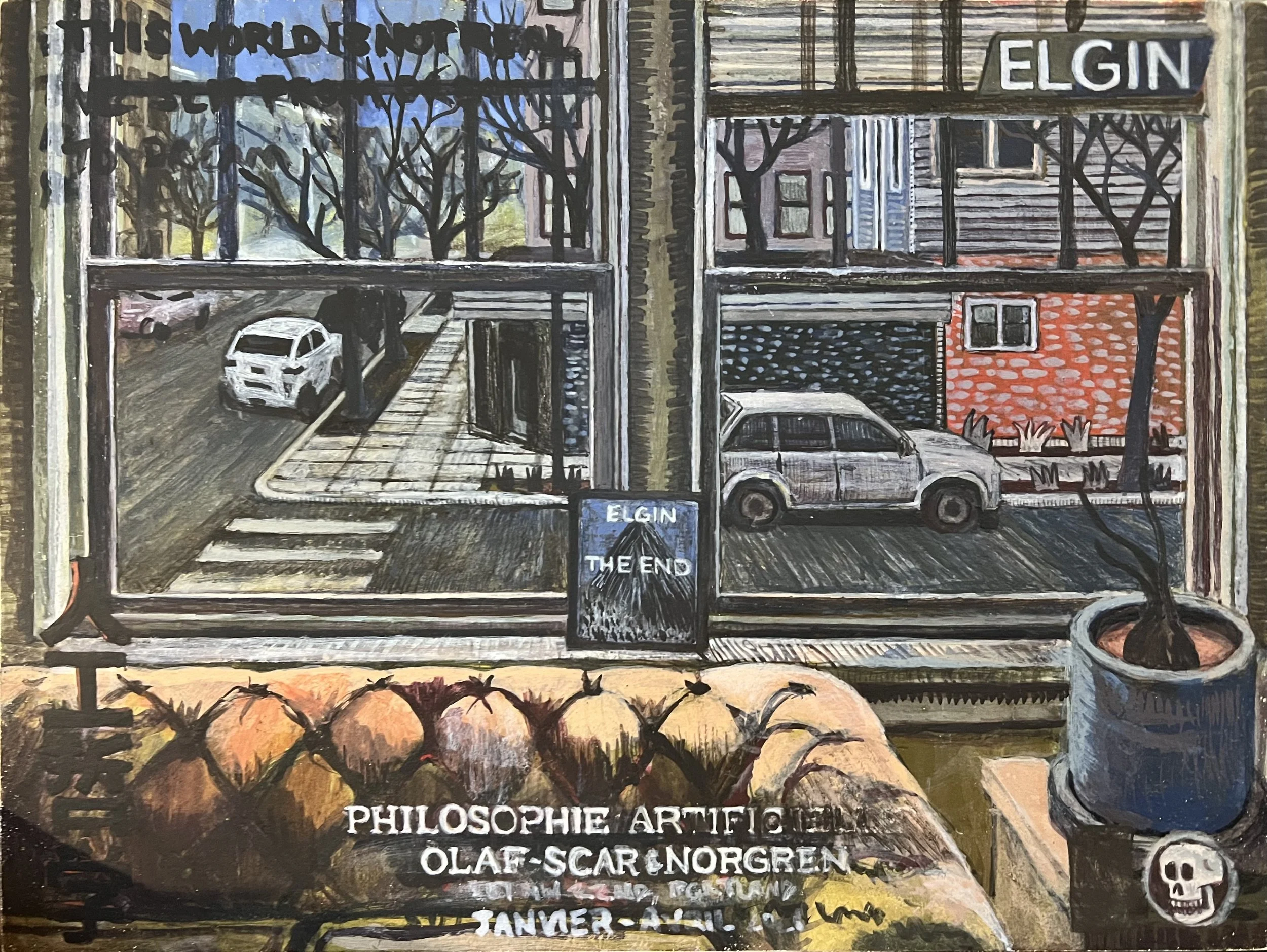
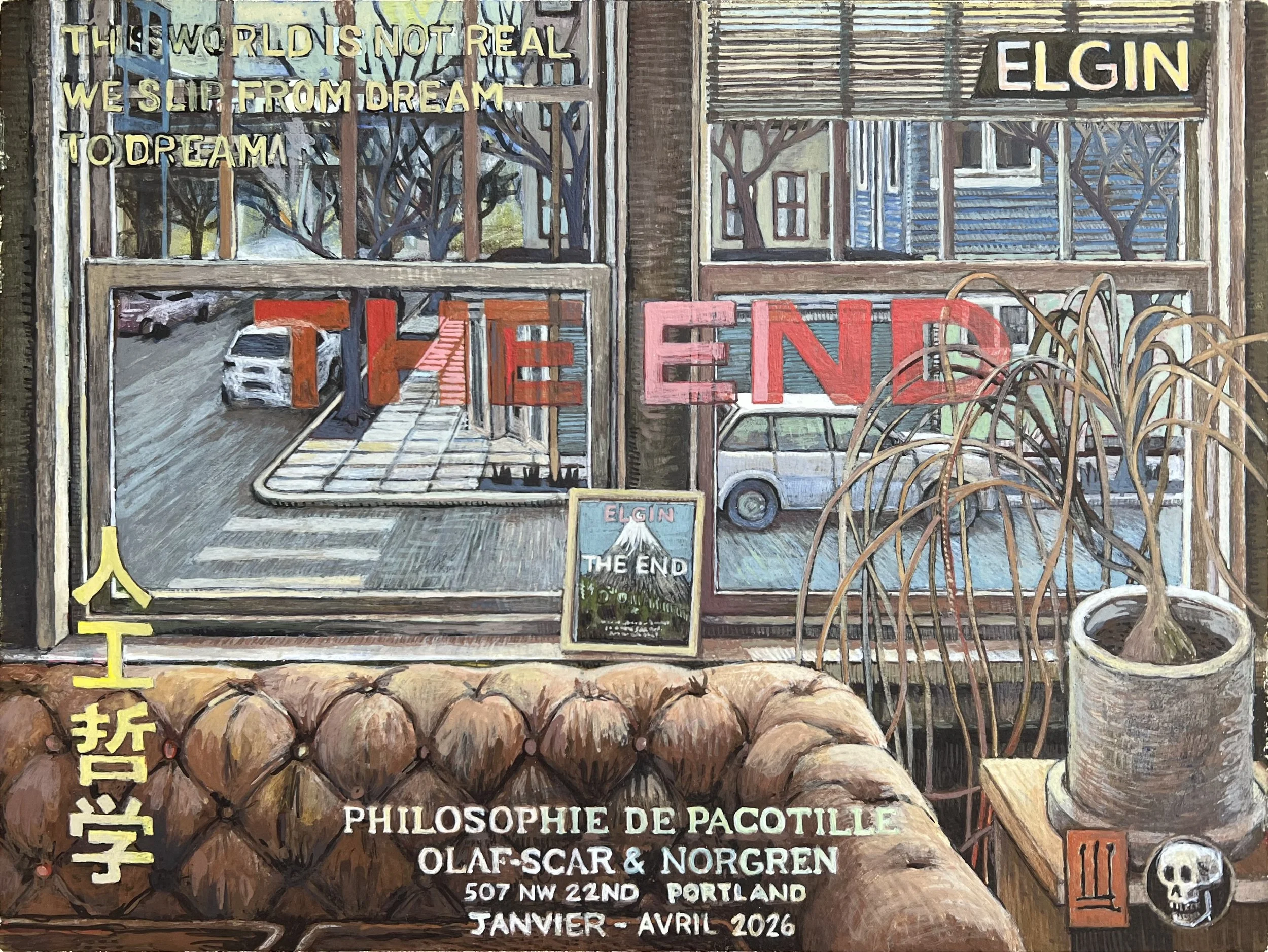
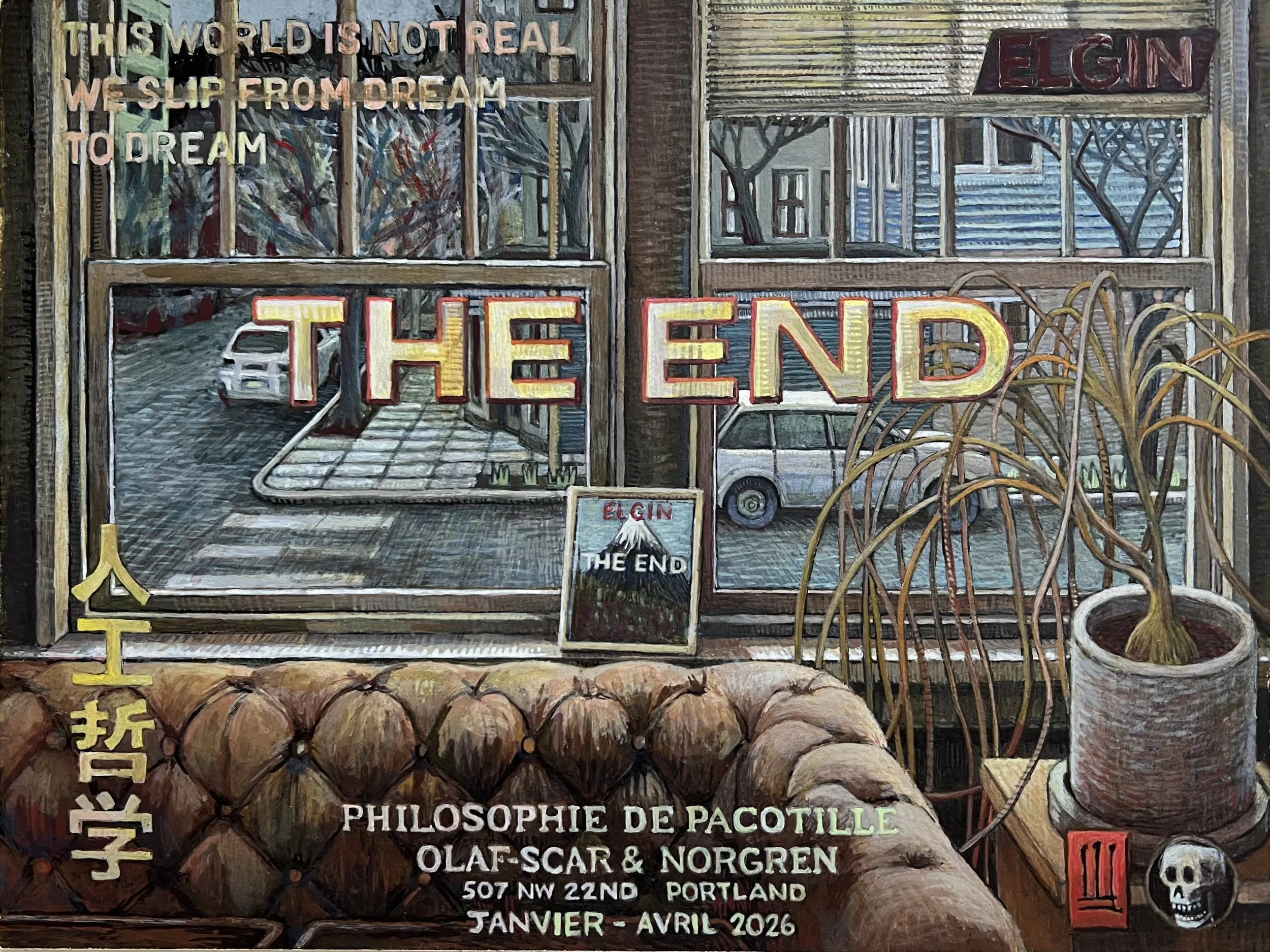
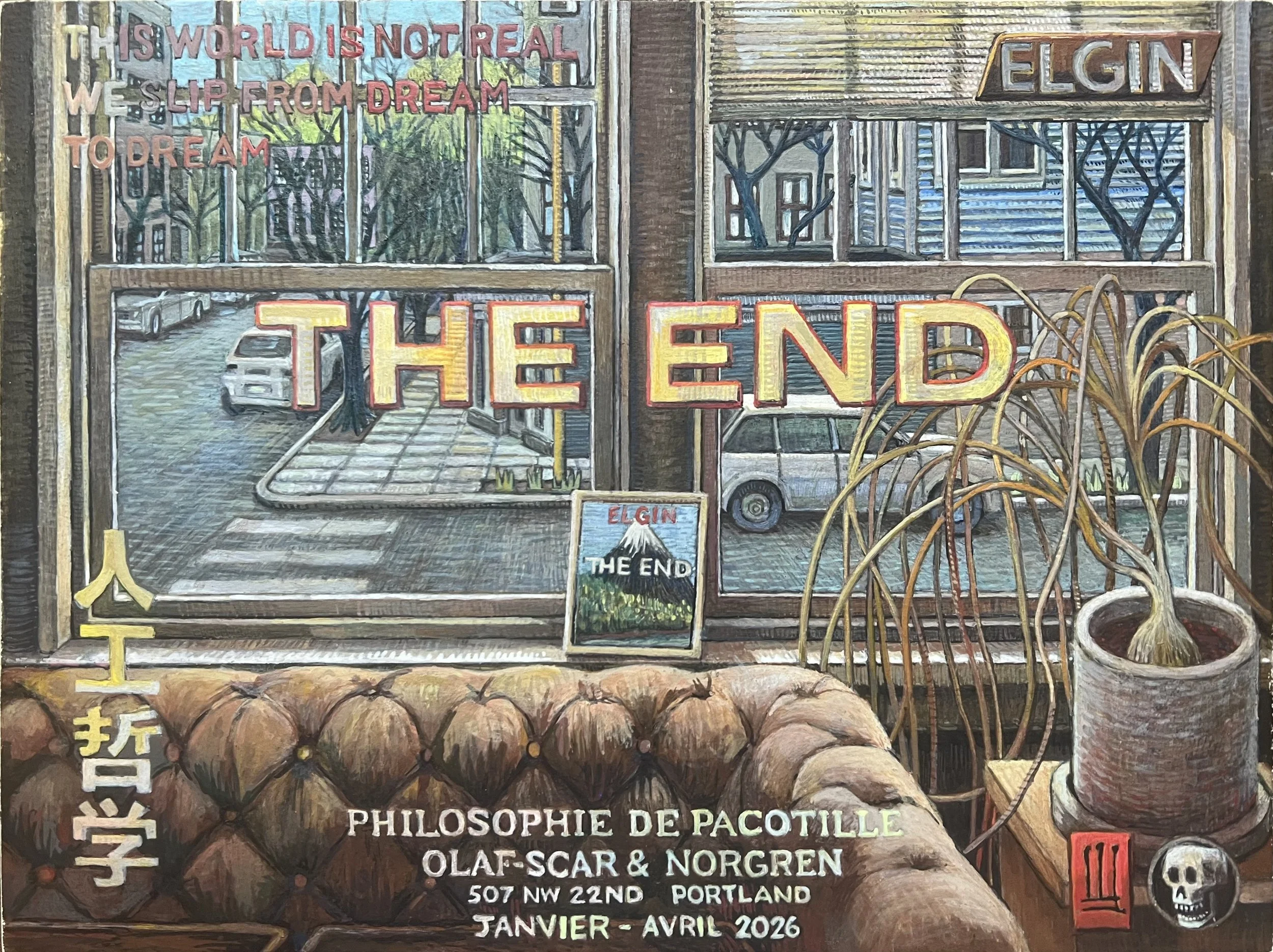
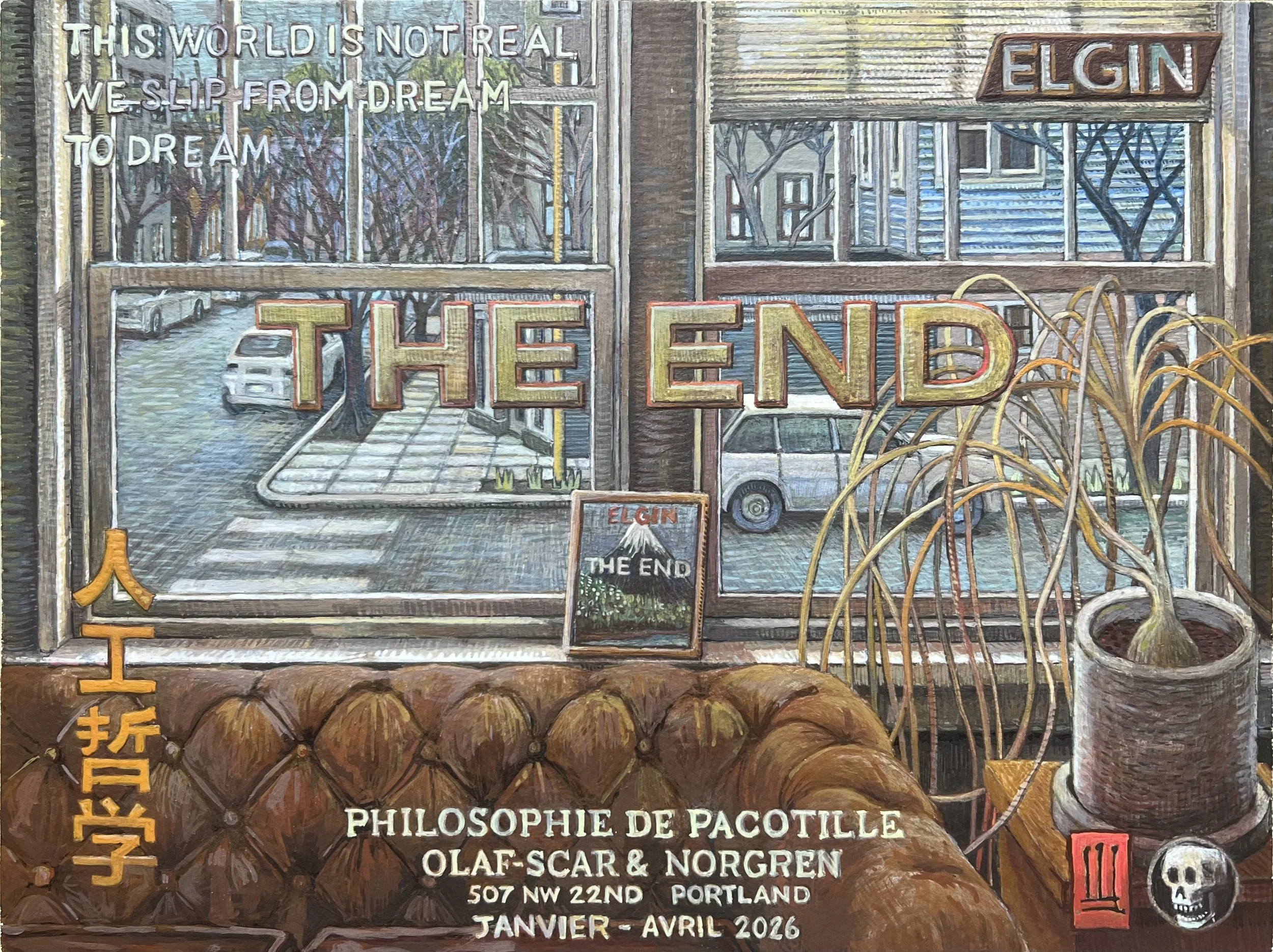
This is the picture at about the 1/2 point after the composition was set
Concept / Philosophy
This piece sits within a broader framework I’ve pushed my current works into. I’m wanting to use text and semiotic elements to extend the meaning of the image.
When we think about communication, I think its natural to think about spoken or written language. I see painting (and other arts like music) as a parallel communication system. Music constructs emotional sequences over time that can create a complex meaning. Painting traditionally presents as a gestalt. The viewer can take it in all at once, and meaning unfolds through rumination rather than the duration of the experience.
The text in the painting is an attempt to layer additional meaning into that moment. It reflects the internal state of myself (the creator) during the act of painting.
While I’m painting, as a human, I’m thinking about a ton of things including art history, theory, things that have happened over the course of the day, what is happening in the world at the moment. I also have constant mental spasms kind of like what I suspect turrets must be like. Choppy ideas that hit in a flash. These ideas aren’t words or even images but a deeper whole ‘thing’. A blob of mostly feelings.
The author Michael Pollan has recently been exploring this idea, ‘What is a thought? What is consciousness?” This is what I was often thinking about when I was working on this piece. When I have thoughts, they are always colors, shapes, emotions, and sometimes a voice. Often they are stuttering shadow ideas that are never fully developed or followed. Does everyone think that way?
The painting attempts to capture one of these moments.
In this case, the trigger for that moment was a passage from a story by Borges. In one short story where he is in a dream, it ends with the world collapsing into unreality and what is left is endless possibilities of other realities. I loved the feeling of absolute horror in the last line. That horror is the emotion I’m trying to convey.
“I fled the room. Outside there was no verandah, no marble stair, no silent rambling house, no eucalypti, or statues, neither public square nor fountains, nor the slack gate in the railing of the villa in the suburb of Adrogué.
Outside other dreams waited upon me.”
Borges conveyed this idea that we could be in a dream and we just shift from one dream to another. I immediately thought of how I could convey this thought to someone else. My internal thought was of a person walking into a gallery, seeing this work and other paintings on the wall, and all of the art on that wall communicating to that person this warning or alert “If you are reading this, understand that you are not real”.
“THE END” became important as both an image and a concept. It represents a kind of abrupt closure.
There is also a layer of classification. As the artist, I’m labeling the thought itself. This is one of a million ideas. Some of the text being shown here are elements of internal classification. Example: “Philosophie De Pacotille #1” represents that this is one of a group of paintings that go together.
The lines of text and the ‘THE END’ were fleeting thoughts. I had them in a moment. My mind kept going elsewhere. This painting is my attempt to capture that moment.
Framing the Work
As a person: I had an idea.
As an artist: I am trying to translate that idea using more than just language, music, or a visual representation alone.
As a viewer: the painting offers more than an observational image. It presents a layered experience combining representation, text, and fragmented thought.
My overall goal with this painting is not clarity. The goal is to approximate the structure of a fleeting, unexamined thought.
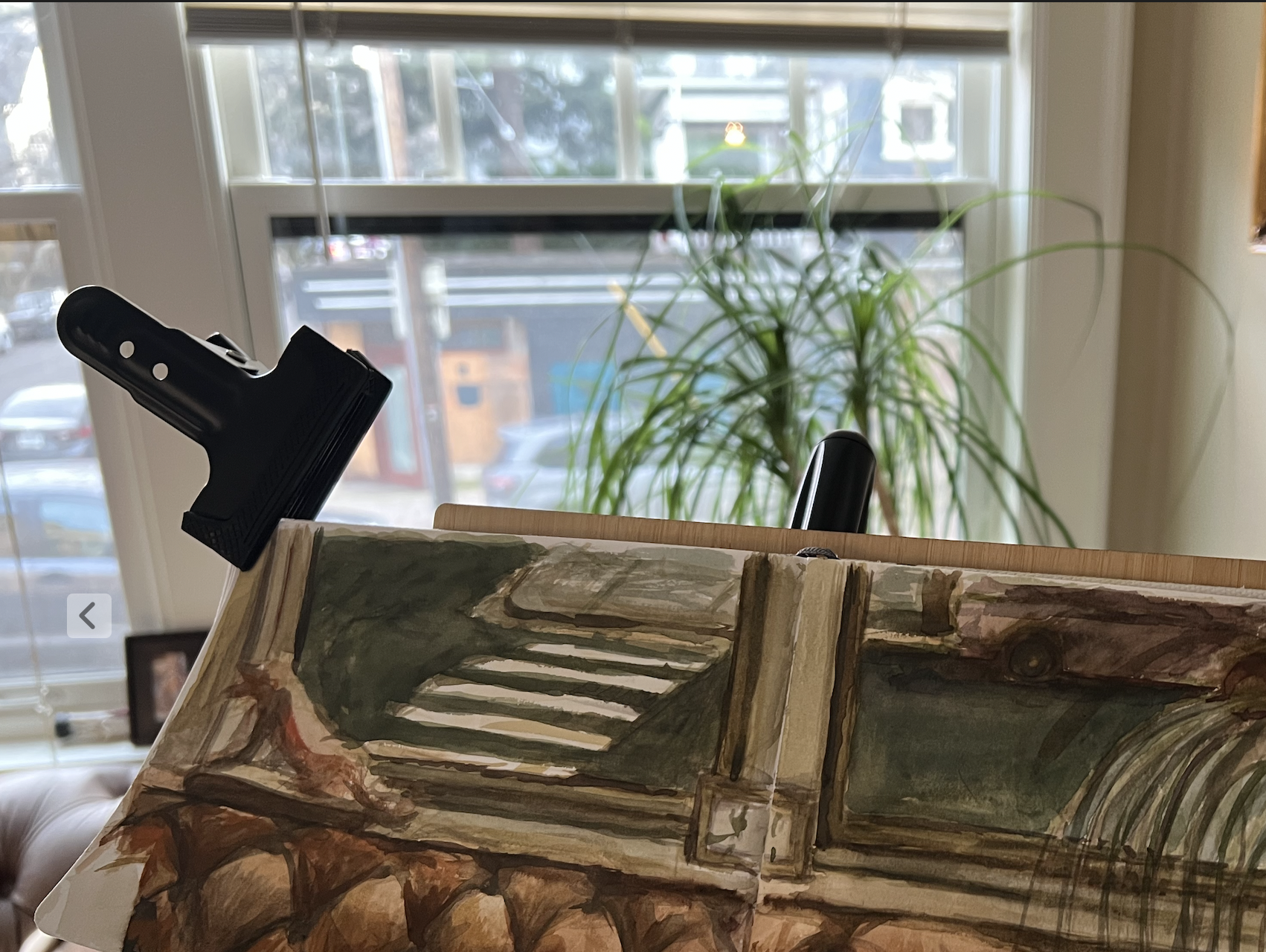
Watercolor Study
Short study prior to starting the egg tempera panel. My plan in the future is to produce several studies that will help elaborate this process idea I’m mulling over.
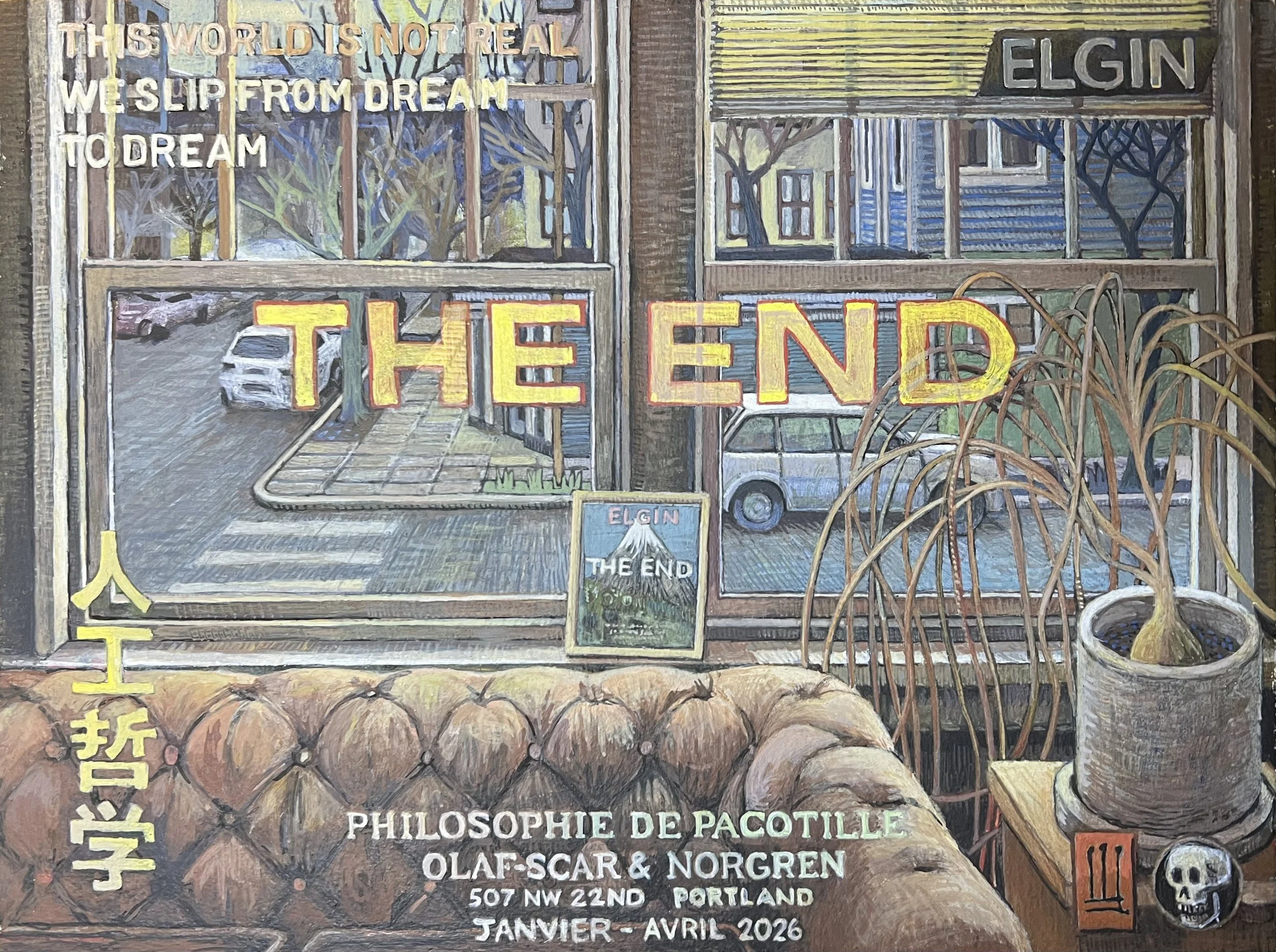
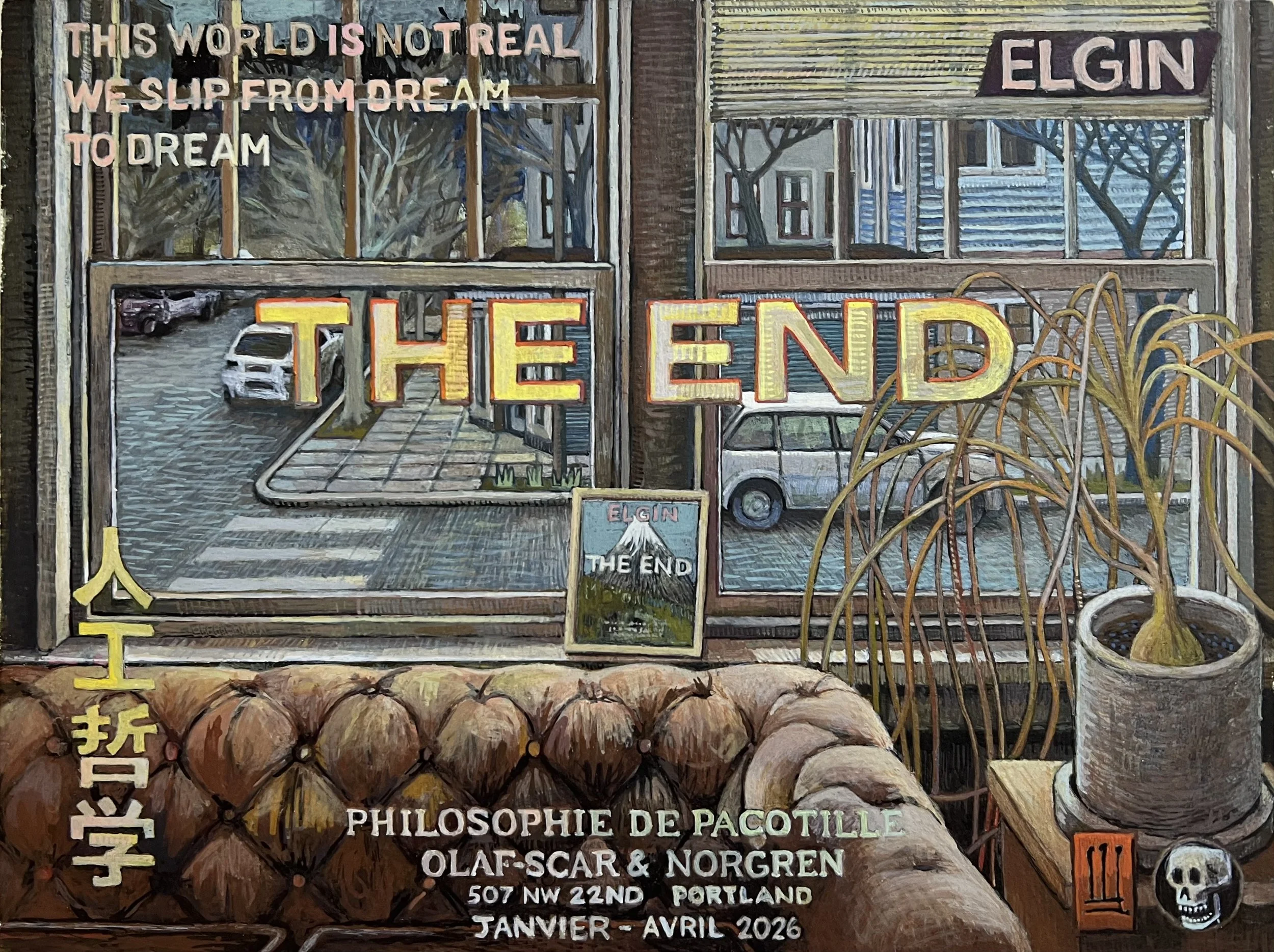
I always enjoy seeing how other people do things. I’m going to start documenting work step by step since that is what I would enjoy seeing from others. (I started pretty far along with this one).
The Future:
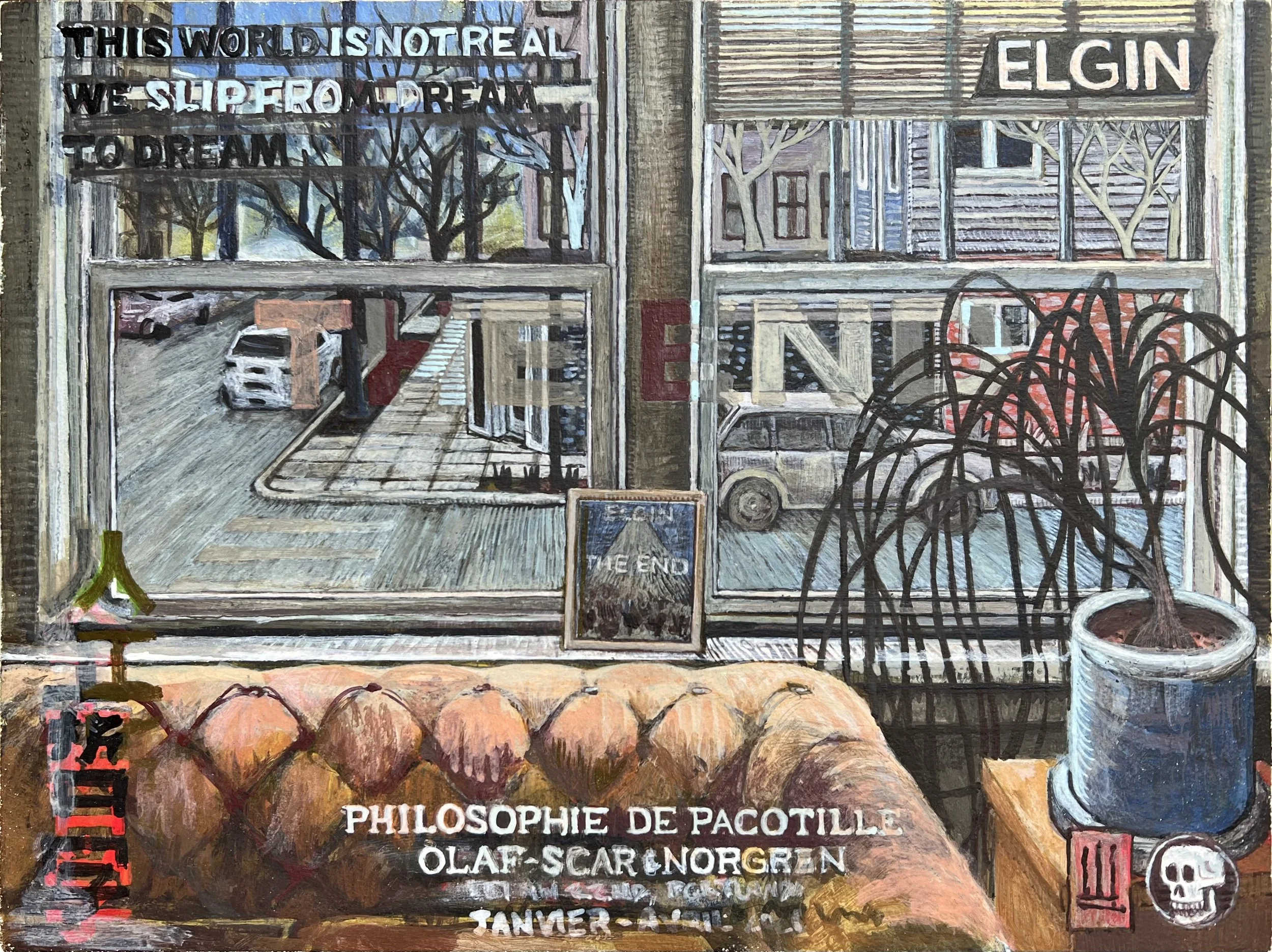
This piece is small, it can be held in the hand. Its scale changes how it is experienced by the viewer. Unlike a large oil painting that occupies space, this panel requires close looking. The mark making is restrained. I am interested in how this work could be translated to a much larger scale where the focus could be on different methods of mark making.
I intend for this piece to be part of a broader series. I am working from a small set of locations (two to four in total). Each begins with watercolor studies done on site to establish the underlying composition. The egg tempera panel as described in this post is next. After that, I extend the work further through additional mediums (oil and acrylic) each step creating more distance from the original observation. Across the series, the goal is to have a methodology that I am using to explore the composition of a picture and then the process of making the picture. I would love to end up with something that related a late stage Elizabeth Murry piece in the end.
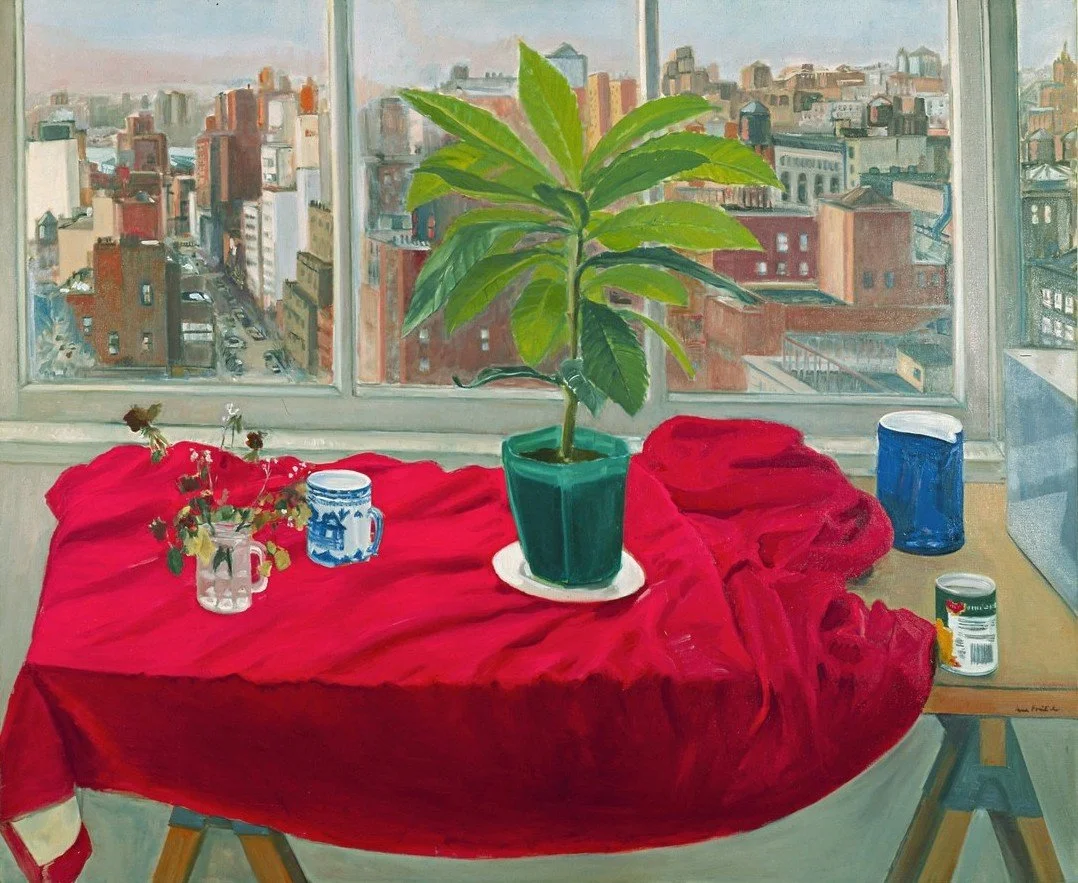
Jane Freilicher (American, 1924-2014), 'Twelfth Street and Beyond', 1976
This is such a good painting. Her work is so light filled. Sigh.